



 Healthcare Software Development Services
 Healthcare App Development Services
 Real Estate Web Development Services
 Real Estate App Development Company
 E-Commerce App Development Services
 E-Commerce Web Development Services
 Blockchain E-commerce Development Company
 Fintech Software Development
 Fintech App Development Services
 E-Learning App Development Services
 Restaurant App Development Company
 Mobile Game Development Company
 Travel App Development Company
 Automotive Web Design
 AI Traffic Management System
 AI Inventory Management Software
 Logistics App Development Services
 Machine Learning Development
 ChatGPT integration services
  AI Development Company
  AI Integration Services
  Natural Language Processing Company
 Mobile App Development
  IOS App Development
  Android App Development
  Cross-Platform App Development
  Augmented Reality (AR) App Development
  Virtual Reality (VR) App Development
  Web App Development
  SaaS App Development
 Custom Software Development Services
  Flutter
  React Native
  Swift (IOS)
  Kotlin (Android)
  Mean Stack Development
  AngularJS Development
  MongoDB Development
  Nodejs Development
  Database Development
 Ruby on Rails Development
 Expressjs Development
  Full Stack Development
  Web Development Services
  Laravel Development
  LAMP Development
  Custom PHP Development
  .Net Development
  User Experience Design Services
  User Interface Design Services
  Automated Testing
  Manual Testing
  Digital Marketing Services
 Ride-Sharing And Taxi Services
 Food Delivery Services
 Grocery Delivery Services
 Transportation And Logistics
 Car Wash App
 Home Services App
 ERP Development Services
 CMS Development Services
 LMS Development
 CRM Development
 DevOps Development Services
 AI Business Solutions
 AI Cloud Solutions
 AI Chatbot Development
 API Development
 Blockchain Product Development
 Cryptocurrency Wallet Development
 About Talentelgia
  Our Team
  Our Culture
 Healthcare App Development Services
 Real Estate Web Development Services
 E-Commerce App Development Services
 E-Commerce Web Development Services
 Blockchain E-commerce
Development Company
Blockchain E-commerce
Development Company Fintech App Development Services
 Blockchain Fintech
Development Company
Blockchain Fintech
Development Company E-Learning App Development Services
 Restaurant App Development Company
 Mobile Game Development Company
 Travel App Development Company
 AI Traffic Management System
 AI Inventory Management Software
 AI Development Company
 ChatGPT integration services
 AI Integration Services
 Machine Learning Development
 Machine learning consulting services
 Blockchain Development
 Blockchain Software Development
 Smart contract development company
 NFT marketplace development services
 Asset tokenization companies
 DeFi Wallet Development Company
 IOS App Development
 Android App Development
 Cross-Platform App Development
 Augmented Reality (AR) App
Development
Augmented Reality (AR) App
Development Virtual Reality (VR) App Development
 Web App Development
 Flutter
 React
Native
React
Native Swift
(IOS)
Swift
(IOS) Kotlin (Android)
 MEAN Stack Development
 AngularJS Development
 MongoDB Development
 Nodejs Development
 Database development services
 Expressjs Development
 Full Stack Development
 Web Development Services
 Laravel Development
 LAMP
Development
LAMP
Development Custom PHP Development
 User Experience Design Services
 User Interface Design Services
 Automated Testing
 Manual
Testing
Manual
Testing About Talentelgia
 Our Team
 Our Culture
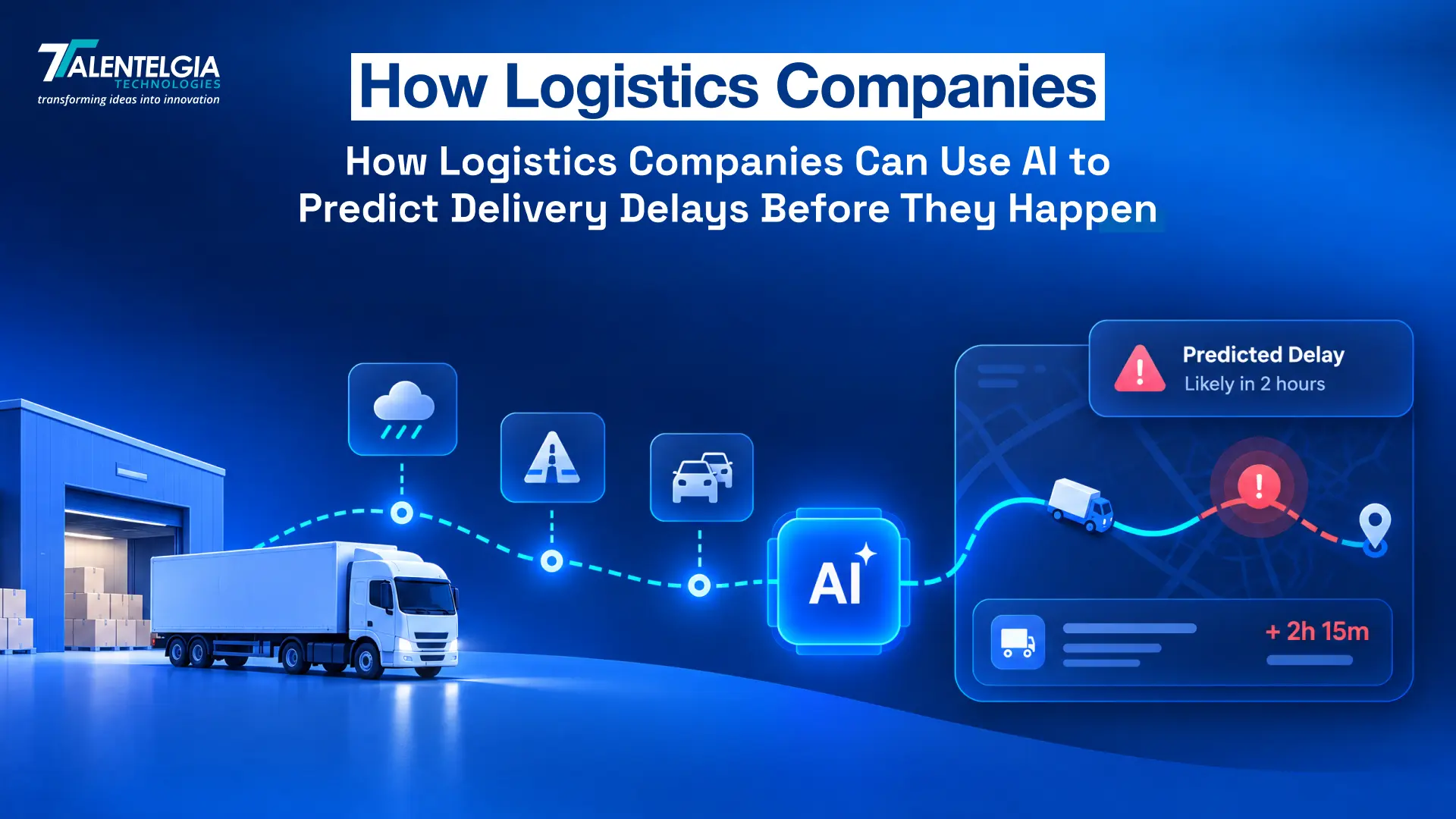
A logistics company does not need to wait until a shipment is late to know that something is going wrong. With the right data, AI can identify patterns that indicate a delivery is becoming at risk, estimate how that risk could affect the route, and give operations teams time to intervene.
That distinction matters because tracking and prediction solve different problems. GPS tracking tells a dispatcher where a vehicle is. An ETA estimates when it should arrive. Delivery prediction goes further by asking whether the shipment is likely to deviate from that expectation and whether the deviation could eventually result in an SLA breach.
For logistics leaders, the value of predictive technology therefore depends less on producing another dashboard and more on creating useful time between risk detection and operational action. The process starts with operational data, turns that data into a prediction, evaluates the risk, and connects the result to a decision.
Why Predicting Delivery Delays Is Harder Than Tracking Them
Tracking a shipment is relatively straightforward: collect its current location and display it on a map. Predicting a delay requires understanding what that location means in relation to the shipment’s original plan.
There are three different questions involved:
- Tracking: Where is the shipment right now?
- ETA: When is the shipment currently expected to arrive?
- Delay prediction: Is the shipment likely to deviate from that expectation?
That third question is considerably harder because the answer depends on what has already happened and what is likely to happen next.
Consider a truck scheduled to leave a warehouse at 8:00 AM but departing at 8:40. A tracking system can immediately show the late departure, while an ETA system can recalculate the expected arrival. Neither necessarily explains whether the shipment has become a serious delivery risk.
The truck could encounter heavy traffic later in the route, spend longer than expected at its first stop, or face narrow appointment windows at subsequent locations. As a result, a 40-minute departure delay could remain a 40-minute delay, become a two-hour problem, or have little effect on the final delivery.
Delays Can Start Before the Vehicle Moves
One of the important reasons prediction is different from tracking is that delivery risk can develop before a vehicle starts its journey.
For example, a shipment can become at risk because of:
- Late picking or staging at the warehouse
- Loading taking longer than planned
- Driver waiting time at a facility
- Missing documentation
- A delayed carrier handoff
- Congestion at a hub or terminal
- A change to the customer’s delivery window
By the time the truck leaves the facility, some of the available recovery time may already be gone.
One Delay Can Affect the Entire Route
The problem becomes more complex on multi-stop routes. A late departure can reduce the available time for the first delivery, which can then push the driver behind schedule for the second stop. Longer service time at that stop can create another delay, increasing the risk for every delivery that follows.
A simplified chain looks like this:
Late loading → Late departure → Traffic exposure → Delayed first stop → Later stops at risk → Potential SLA breach
This is where AI becomes useful. The goal is not simply to tell a logistics team that a shipment is already late. It is to identify the pattern early enough that the team still has time to intervene.
What Can AI Actually Predict in Logistics?
AI-based delivery prediction is not a single prediction. Different outputs answer different operational questions, and combining them gives logistics teams a clearer picture of risk.
| Prediction | What it answers |
| ETA | When is the shipment likely to arrive? |
| Delay probability | How likely is it to miss the planned delivery window? |
| Delay duration | If delayed, how late could it be? |
| Route risk | Which part of the journey is creating risk? |
| Stop-level risk | Which deliveries are most exposed? |
| Confidence | How reliable is the prediction? |
ETA Is Different From Delay Prediction
An ETA and a delay prediction answer different questions. An AI system might estimate that a shipment will arrive at 4:40 PM, while also calculating a high probability that it will miss a 4:00 PM SLA. The first tells the operations team what arrival time to expect; the second indicates whether that outcome represents an exception.
This distinction allows teams to prioritize their attention. A shipment with a slightly changing ETA may not require intervention if it still has a low probability of missing its delivery window. Another shipment may require immediate attention if its delay probability is increasing, even when its current location does not appear unusual.
Predicting Delay Duration
AI can also estimate how long a delay could become. This is important because the operational response to a minor delay may be very different from the response to a delay that could affect several subsequent deliveries.
For example, the system may identify:
- A short delay that is unlikely to affect the SLA
- A moderate delay that puts the next stop at risk
- A larger delay that could affect multiple downstream appointments
Identifying Route and Stop-Level Risk
Prediction also shows where risk is building up. If a driver sits at one stop for too long, several deliveries down the line can slip. Congestion on one stretch of road might only threaten a couple of appointments and leave the rest alone.
That gives logistics teams something they can act on. They can see which shipment is at risk, where the problem is starting, how bad it could get, and how sure the system is about its call.
No model will get every event right, and it doesn’t need to. What matters is that ops teams get enough warning to decide whether to step in.
What Data Does AI Need to Predict Delivery Delays?
The quality of a delivery prediction depends heavily on the operational signals available to the system. However, collecting the largest possible dataset is not necessarily the objective. The important factor is whether the available signals explain how deliveries actually behave.
| Data source | What it helps predict |
| GPS / telematics | Actual route progress |
| Historical deliveries | Recurring delay patterns |
| Traffic | Future travel-time changes |
| Weather | Disruption risk |
| Warehouse events | Late departure or loading |
| Stop/service times | Route duration |
| Carrier performance | Reliability patterns |
| Driver/vehicle data | Operational deviations |
| Orders and SLAs | Delivery risk |
| Hub/terminal data | Upstream congestion |
Historical delivery data provides the baseline. It can reveal typical travel times, recurring delays on specific routes, average service duration, carrier reliability, and differences between planned and actual performance.
Real-time information then shows what is happening now. GPS positions, traffic conditions, warehouse events, and stop durations can indicate that the current shipment is deviating from its normal pattern.
External signals can add further context. Weather may increase risk on particular routes, while traffic conditions can change expected travel time after a vehicle has already departed.
Supply chain AI becomes useful when these signals are connected rather than analyzed in isolation. A GPS system may know that a truck has stopped. A WMS may know that loading took longer than planned. A TMS may know that the shipment has a narrow delivery window. Bringing these signals together creates a much more useful picture of delivery risk.
EDI can also contribute operational events. For example, EDI 204 can communicate a motor carrier load tender, while EDI 214 can provide transportation shipment status information. EDI API integrations can similarly connect external transportation events with internal prediction workflows.
How Predictive Logistics Software Predicts a Delay
Custom software development for logistics turns those operational signals into an ongoing assessment of delivery risk. The process can be understood through five stages.
1. Establish the expected delivery
The system first needs a baseline. This may include the planned route, scheduled departure, historical travel times, appointment window, delivery SLA, expected stop duration, and other operational constraints.
Without this baseline, the system cannot determine whether the shipment is behaving differently from what was expected.
2. Monitor actual progress
The system then continuously receives information about the shipment. GPS and telematics can show current location and movement. TMS events can indicate changes in the transportation plan. Warehouse systems can provide loading or dispatch information, while traffic and weather feeds provide external context.
The important point is that the prediction should not be based solely on the vehicle’s location.
3. Detect deviation
The prediction model compares observed behavior with the expected journey.
A vehicle that has travelled a particular corridor may normally cover a certain distance within a given period. If current progress is significantly different, the system can identify that deviation.
Similarly, a shipment that has spent substantially longer than expected at a warehouse or delivery stop may become a risk even if the vehicle is otherwise following its planned route.
4. Estimate future impact
Detecting a deviation is only the beginning. The system needs to estimate what that deviation means for the remainder of the journey.
A ten-minute delay before the first stop may be insignificant. The same delay on a tightly scheduled multi-stop route could affect several subsequent deliveries.
This is where cascading delay analysis becomes important. The model can consider remaining travel time, stop durations, appointment windows, route conditions, and downstream deliveries to estimate whether the current problem is likely to remain isolated or spread across the route.
5. Assign risk and confidence
The system can then produce outputs such as expected ETA, delay probability, expected delay duration, and confidence.
A simplified flow looks like this:
Operational Data
↓
Data Integration
↓
Prediction Model
↓
ETA + Delay Probability + Delay Duration
↓
Risk / Confidence
↓
Operational Alert
The final step is particularly important. A prediction has limited value if it remains inside a model and never reaches the people responsible for the shipment.
The real objective is to create enough time-to-intervene for the logistics team to make an informed decision.
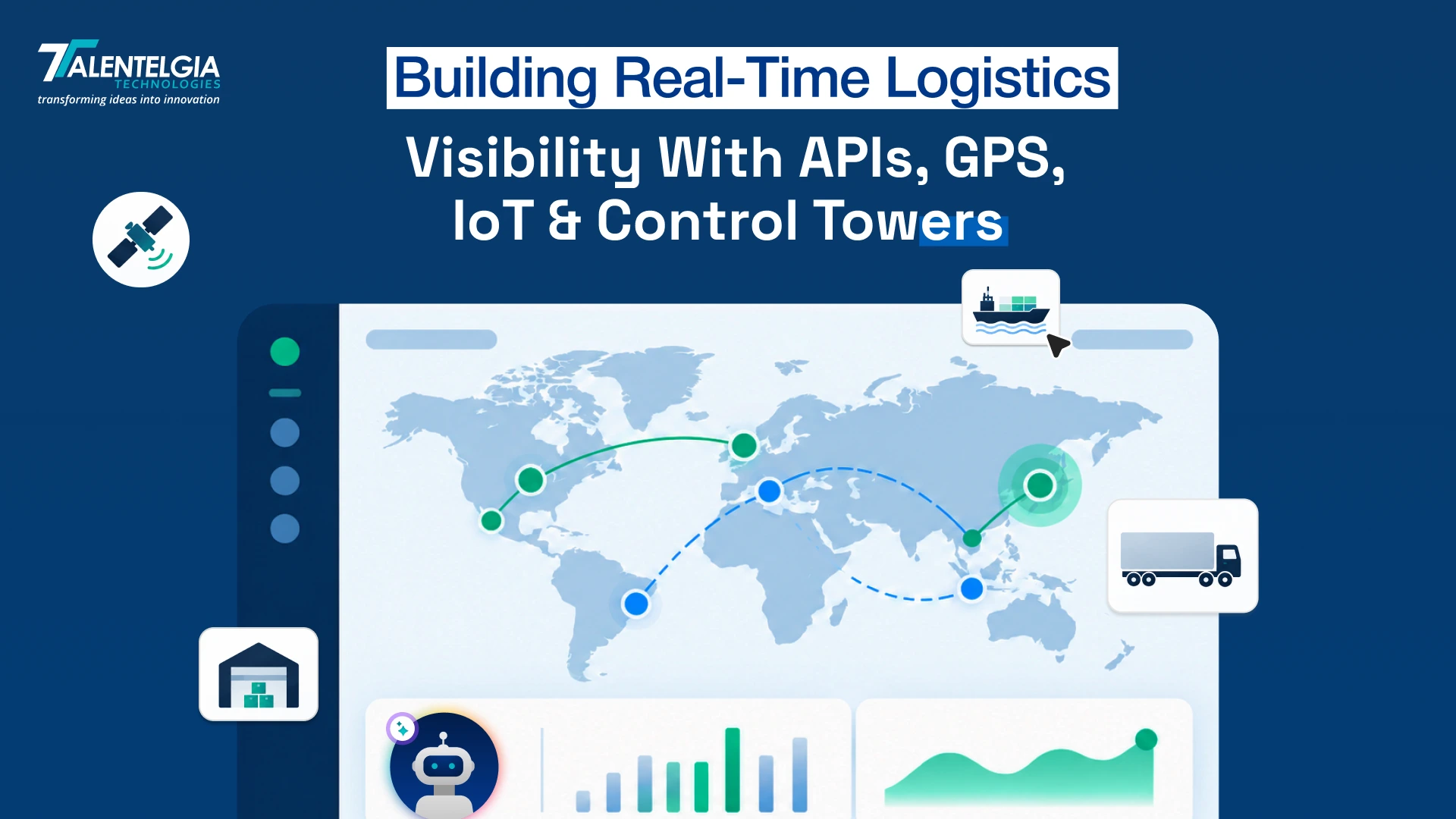
Also Read: Building Real-Time Logistics Visibility With APIs, GPS, IoT & Control Towers
How AI Can Detect Different Types of Delivery Delay
Different delays leave different signals in operational data. A useful AI system should therefore consider the cause and context of a potential delay rather than treating every exception the same way.
- Traffic-related delays can be identified by combining real-time traffic conditions with historical travel patterns for the affected corridor. A route that normally takes 45 minutes may suddenly require significantly longer because of congestion or an incident.
- Warehouse and loading delays can be detected by comparing planned and actual loading or departure times. If a truck is still waiting at a facility beyond its expected departure time, the system can reassess the delivery schedule before the vehicle enters the road network.
- Route and stop delays can emerge from unexpected dwell or service times. If a driver spends substantially longer at one customer location than the historical pattern suggests, later stops may become exposed.
- Weather-related disruptions require contextual information about conditions along the remaining route. Weather does not automatically mean a shipment will be late, but it can change travel conditions and increase uncertainty.
- Carrier and vehicle-related delays can be identified through historical carrier performance, current vehicle information, and operational patterns. Repeated late departures or unusual vehicle behavior can become useful risk signals.
The most important category is often cascading delay. A prediction system should not only ask, “Is this stop late?” It should also ask, “What does this delay mean for everything that comes after it?”
What a Production-Ready AI Logistics System Needs
A demonstration can show that a model predicts delivery delays. A production system has to make those predictions reliably available within the workflows where logistics decisions actually happen.
That requires more than a machine-learning model. A production-ready AI logistics system may need real-time data integration, historical data pipelines, TMS/WMS/ERP connectivity, GPS and telematics integration, prediction APIs, exception management, dashboards, alerts, model monitoring, data-quality monitoring, human overrides, and feedback loops.
| A typical architecture could look like this:TMS / WMS / ERP GPS / Telematics Traffic / Weather Historical Data ↓ Integration Layer ↓ AI Prediction Engine ↓ Risk & Exception Engine ↓ Dispatcher / Operations ↓ Action ↓ Outcome / Feedback |
This architecture also explains where AI logistics software fits within an existing technology environment. The prediction engine does not necessarily need to replace the TMS or WMS. Instead, it can consume relevant information, generate predictions, and return risk signals to the systems and teams already responsible for transportation operations.
Feedback matters here too. Each time an intervention works or fails, the result gets logged alongside the original alert. Over time, that record shows teams whether the model flagged real risks and whether the response it suggested made any difference.
Building an AI logistics system around your existing TMS, WMS, and telematics stack? Talk to our logistics software development company about your requirements.
How to Measure Whether AI Delay Prediction Is Actually Working
A prediction model should not be evaluated solely by its technical accuracy.
At the model level, logistics teams can examine ETA accuracy, delay classification accuracy, delay-duration error, false positives, and false negatives. These metrics help determine whether the system is making useful predictions.
But operational metrics are equally important. How much lead time does the system provide? How much time-to-intervene exists between the warning and the potential SLA breach? Are teams successfully resolving predicted exceptions? Are SLA breaches declining? Are manual escalations becoming more manageable?
Business outcomes provide another layer:
- Customer complaints
- Re-deliveries
- Expedited transportation
- Dispatcher workload
- Cost of exceptions
- Missed appointment windows
- On-time delivery performance
The distinction between model performance and operational performance is important. A model can be highly accurate while still providing limited business value if it identifies a problem only a few minutes before there is any realistic opportunity to respond.
Conversely, a prediction that is slightly less precise but arrives early enough for a dispatcher to reroute a shipment or coordinate with a customer may be more useful operationally.
The measurement framework should therefore connect prediction quality with intervention quality.
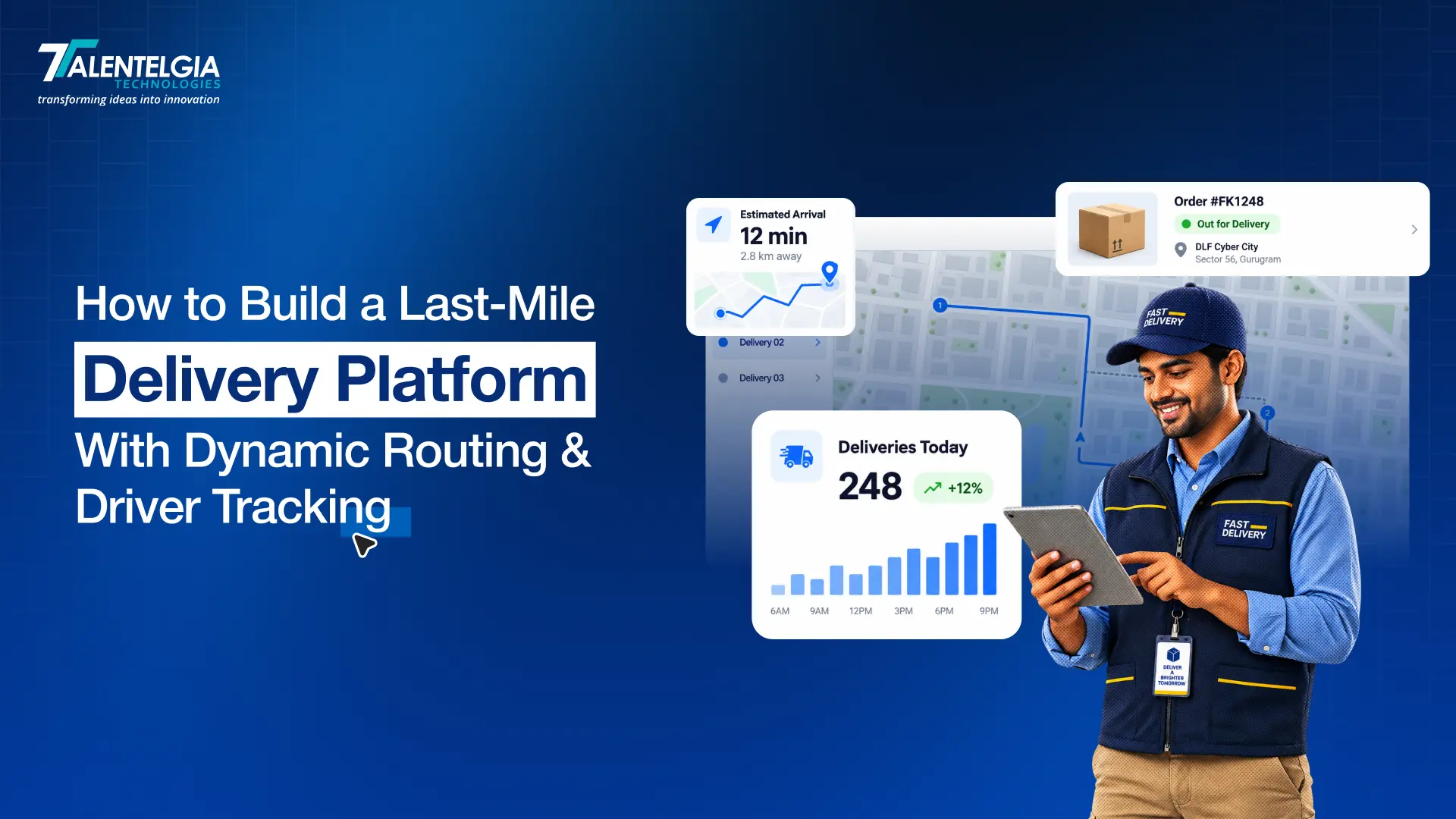
Also Read: How to Build a Last-Mile Delivery Platform With Dynamic Routing & Driver Tracking
Challenges of Implementing AI for Delivery Prediction
Building a delivery prediction system is not simply a matter of selecting an AI model and feeding it logistics data. The harder part is creating a reliable operational foundation around the model. Several factors can affect whether predictions remain useful once the system is deployed across real transportation networks.
Data Quality and Availability
Predictive models depend on historical and real-time data that accurately represents what is happening in the operation. In practice, logistics data can contain missing timestamps, inconsistent shipment statuses, incomplete GPS signals, or discrepancies between systems.
Common data problems include:
- Missing or delayed shipment events
- Inconsistent status codes across platforms
- Gaps in GPS or telematics data
- Incomplete historical delivery records
- Different definitions of the same operational event
If the underlying data does not accurately reflect actual delivery performance, the prediction system has less reliable information from which to identify patterns.
Fragmented Logistics Systems
Transportation, warehouse, fleet, carrier, and customer information often sits across different platforms. A TMS may contain shipment information while a WMS manages warehouse events and a telematics platform provides vehicle data.
Connecting these sources requires reliable APIs, event streams, or EDI integration. Simply placing another dashboard on top of disconnected systems does not solve the underlying data problem.
Cold Starts, Model Drift, and Unusual Events
Prediction becomes more difficult when the system encounters situations with little or no historical precedent.
This can happen with:
- New delivery routes or regions
- New customers or facilities
- Changes in carrier behavior
- Major infrastructure disruptions
- Unusual weather or traffic conditions
A model can also experience model drift when operational patterns change over time. A pattern that was reliable for one geography, carrier group, or route may become less representative as conditions change.
Uncertainty and Human Oversight
No prediction system can account perfectly for every future event. Logistics teams therefore need visibility into the confidence of predictions rather than treating every alert as certain.
AI should support operational decisions rather than automatically override business rules or human judgment. Confidence indicators, explainable risk signals, and human override options help teams determine when an AI-generated warning requires action.
When Logistics Companies Should Consider Custom AI Logistics Software
Off-the-shelf transportation platforms can support many standard logistics workflows. However, companies with complex networks often need prediction capabilities that fit their existing processes rather than forcing those processes into a predefined system.
Custom AI logistics software becomes more relevant when a company has several of the following requirements:
- A complex or highly specialized delivery network
- Multiple carriers with different operating patterns
- Customer-specific SLA and appointment rules
- Proprietary transportation or delivery data
- Existing TMS, WMS, ERP, and telematics systems
- Specialized exception-management workflows
- Custom prediction or risk-scoring requirements
For these organizations, the challenge is usually not finding an AI model. It is connecting the prediction to the way the logistics operation actually works.
Connecting Prediction With Existing Systems
Logistics software development can connect predictive models with the systems already responsible for transportation and warehouse operations. Instead of creating another isolated application, the prediction layer can exchange information with the company’s existing TMS, WMS, telematics, customer systems, and internal workflows.
For example, a company may want its system to:
- Identify shipments with a high probability of missing an SLA.
- Apply different risk thresholds based on customer requirements.
- Send high-priority exceptions to a dispatcher.
- Update the relevant transportation workflow.
- Record the outcome of the intervention for future analysis.
That requires more than an accurate prediction model. The prediction, decision rules, integrations, and operational response all need to work together.
This is where logistics custom software development services can provide value: building a prediction and intervention layer around the company’s existing transportation processes rather than treating AI as a standalone feature.
Talentelgia can help develop logistics software that connects predictive analytics with the operational systems, integrations, and workflows already used by logistics teams.
Conclusion
AI does not prevent every delivery delay. Its practical value is giving logistics teams earlier visibility into which shipments are becoming at risk and enough time to decide what to do about them.
That requires more than GPS tracking or continuously recalculated ETAs. A useful predictive system combines operational history, real-time signals, route conditions, warehouse events, carrier performance, customer requirements, and other relevant data to estimate what could happen next.
The resulting workflow is straightforward:
Data → Prediction → Risk → Intervention → Outcome
For logistics leaders, that shift changes the role of predictive technology. The objective is not to produce another alert after a problem has already become obvious. It is to identify the problem early enough for an operational response to still matter.
Talk to Talentelgia about building predictive logistics software around your existing systems and workflows.
FAQs
Predictive logistics software uses historical and real-time operational data to estimate future transportation outcomes. It can identify potential delivery delays, estimate changing ETAs, assess route or stop risk, and provide warnings that allow logistics teams to intervene before an exception becomes unavoidable.
It checks what’s happening with a shipment right now against what has happened on similar deliveries before, and against what the delivery is supposed to achieve. GPS movement, traffic, weather, warehouse events, stop duration, and carrier performance all feed into it. From those signals, the model estimates whether the shipment is drifting off its schedule.
Most setups pull from GPS and telematics, past shipment records, traffic and weather feeds, warehouse events, stop times, carrier performance, vehicle details, and customer SLAs. TMS and WMS events matter too. EDI messages and API integrations can fill in transportation status updates that the other sources miss.
Yes. A prediction system can estimate delay duration in addition to calculating the probability of a delay. However, the estimate is probabilistic rather than guaranteed. Confidence depends on factors such as data quality, available historical patterns, route conditions, and how unusual the current situation is.
AI can be integrated through APIs, event streams, EDI, or other data-integration mechanisms. The prediction engine can consume transportation and warehouse information, calculate delivery risk, and return alerts or predictions to existing operational systems without necessarily replacing the TMS or WMS.











 Sales Enquiries:
  Business queries:
  HR:
HR: 


