

 Healthcare Software Development Services
 Healthcare App Development Services
 Real Estate Web Development Services
 Real Estate App Development Company
 E-Commerce App Development Services
 E-Commerce Web Development Services
 Blockchain E-commerce Development Company
 Fintech Software Development
 Fintech App Development Services
 E-Learning App Development Services
 Restaurant App Development Company
 Mobile Game Development Company
 Travel App Development Company
 Automotive Web Design
 AI Traffic Management System
 AI Inventory Management Software
 Logistics App Development Services
 Machine Learning Development
 ChatGPT integration services
  AI Development Company
  AI Integration Services
  Natural Language Processing Company
 Mobile App Development
  IOS App Development
  Android App Development
  Cross-Platform App Development
  Augmented Reality (AR) App Development
  Virtual Reality (VR) App Development
  Web App Development
  SaaS App Development
 Custom Software Development Services
  Flutter
  React Native
  Swift (IOS)
  Kotlin (Android)
  Mean Stack Development
  AngularJS Development
  MongoDB Development
  Nodejs Development
  Database Development
 Ruby on Rails Development
 Expressjs Development
  Full Stack Development
  Web Development Services
  Laravel Development
  LAMP Development
  Custom PHP Development
  .Net Development
  User Experience Design Services
  User Interface Design Services
  Automated Testing
  Manual Testing
  Digital Marketing Services
 Ride-Sharing And Taxi Services
 Food Delivery Services
 Grocery Delivery Services
 Transportation And Logistics
 Car Wash App
 Home Services App
 ERP Development Services
 CMS Development Services
 LMS Development
 CRM Development
 DevOps Development Services
 AI Business Solutions
 AI Cloud Solutions
 AI Chatbot Development
 API Development
 Blockchain Product Development
 Cryptocurrency Wallet Development
 About Talentelgia
  Our Team
  Our Culture
 Healthcare App Development Services
 Real Estate Web Development Services
 E-Commerce App Development Services
 E-Commerce Web Development Services
 Blockchain E-commerce
Development Company
Blockchain E-commerce
Development Company Fintech App Development Services
 Blockchain Fintech
Development Company
Blockchain Fintech
Development Company E-Learning App Development Services
 Restaurant App Development Company
 Mobile Game Development Company
 Travel App Development Company
 AI Traffic Management System
 AI Inventory Management Software
 AI Development Company
 ChatGPT integration services
 AI Integration Services
 Machine Learning Development
 Machine learning consulting services
 Blockchain Development
 Blockchain Software Development
 Smart contract development company
 NFT marketplace development services
 Asset tokenization companies
 DeFi Wallet Development Company
 IOS App Development
 Android App Development
 Cross-Platform App Development
 Augmented Reality (AR) App
Development
Augmented Reality (AR) App
Development Virtual Reality (VR) App Development
 Web App Development
 Flutter
 React
Native
React
Native Swift
(IOS)
Swift
(IOS) Kotlin (Android)
 MEAN Stack Development
 AngularJS Development
 MongoDB Development
 Nodejs Development
 Database development services
 Expressjs Development
 Full Stack Development
 Web Development Services
 Laravel Development
 LAMP
Development
LAMP
Development Custom PHP Development
 User Experience Design Services
 User Interface Design Services
 Automated Testing
 Manual
Testing
Manual
Testing About Talentelgia
 Our Team
 Our Culture
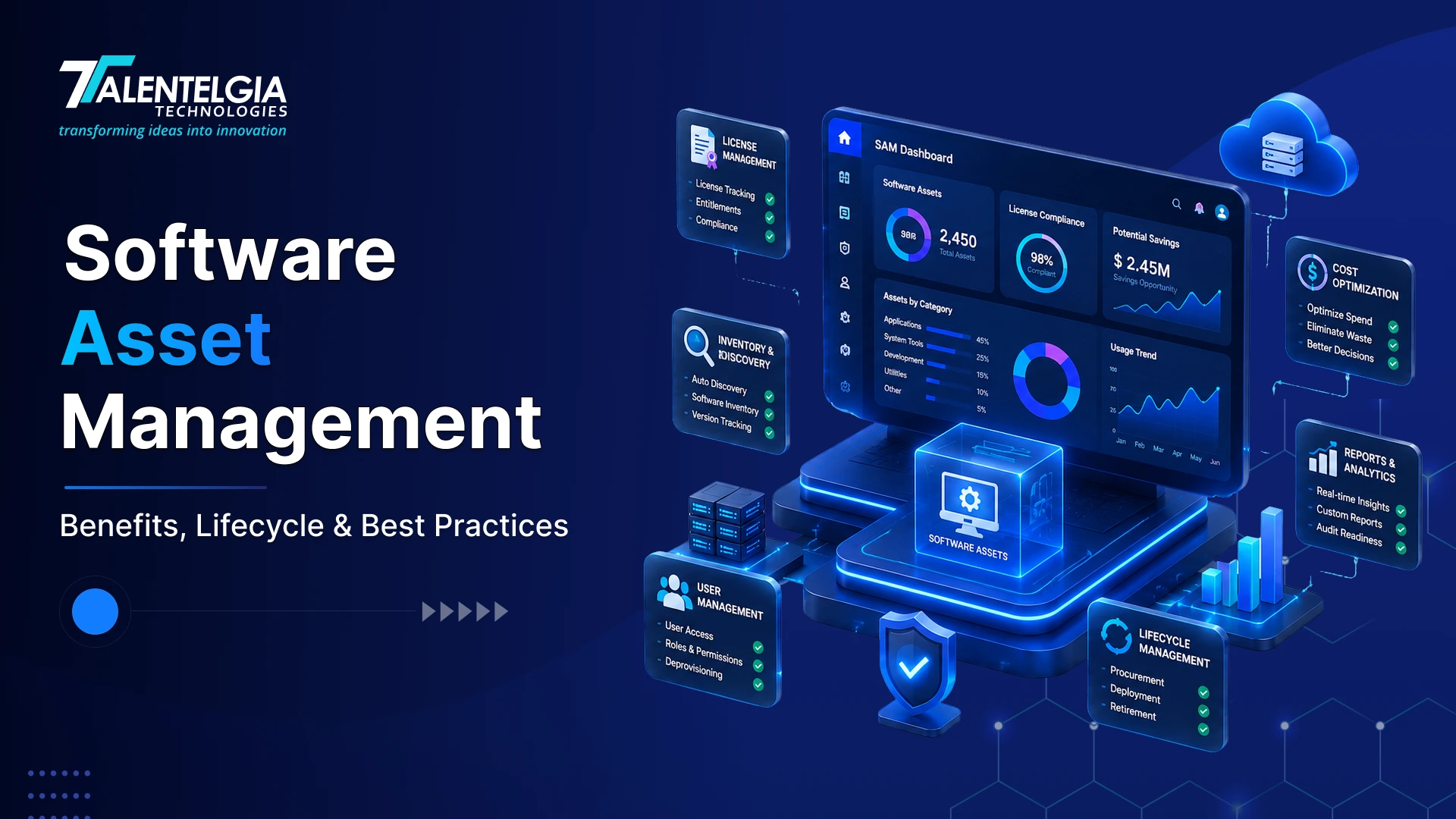
Software Asset Management (SAM) is a set of practices for planning, managing and optimizing software assets throughout their lifecycle. It refers to the way organizations manage their software through taking full possession, keeping track of what they have, and managing the usage of those software assets without any cost going to waste, being non-compliant, or going unnoticed. SAM starts from the acquisition of the software until its retirement in the organization.
It deals with:
- Cost management – removes unnecessary licensing, saves on overspending, and makes smarter procurement decisions
- Compliance – makes sure all installed software is licensed to avoid audit risks and legal issues
- Security – keeps track of what software exists so that vulnerabilities can be found within the system
SAM covers all aspects of software, whether internal or external; SaaS subscriptions, cloud-based tools, or enterprise platforms. The field is changing: today, it takes into account AI business solutions, automation platforms, and open-source software, which the older approaches were not able to handle.
In this guide, we’ll explore why Software Asset Management matters, its key benefits, the stages of the SAM lifecycle, and the best practices organizations can follow to maximize the value of their software investments.
But What is a Software Asset?
It’s any software your organization owns, licenses, subscribes to, or actively uses, from enterprise platforms to individual SaaS tools.
SAM vs ITAM vs HAM
SAM doesn’t exist in isolation. Research it long enough, and two other terms will keep showing up — ITAM and HAM. They’re related, but they’re not the same thing, and conflating them is where a lot of organizations go wrong. Misaligned responsibilities, governance blind spots, and poorly structured SAM programs often trace back to this exact confusion. So before going any further, let’s get all three clearly defined.
- ITAM is the parent – IT Asset Management covers every technology asset an organization owns: software, hardware, cloud resources, SaaS subscriptions, and everything in between. It’s the broadest discipline, built for total visibility and strategic governance across the entire IT portfolio.
- SAM lives inside ITAM. Software Asset Management is ITAM narrowed down to the software layer: licenses, entitlements, usage, compliance, and spend. It’s where vendor audits get managed, shelfware gets eliminated, and licensing agreements get optimized.
- HAM is ITAM’s other half. Hardware Asset Management handles the physical layer: servers, laptops, phones, network equipment, tracking every device from procurement through secure disposal.
| Aspect | SAM | HAM | ITAM |
|---|---|---|---|
| Focus | Software licenses & compliance | Physical devices & infrastructure | All IT assets end-to-end |
| Key activities | License tracking, audit readiness, spend optimization | Device inventory, maintenance, lifecycle | Strategic governance, TCO, full asset visibility |
| Compliance scope | Vendor agreements, software audits | Warranty terms, disposal regulations | Enterprise-wide regulatory compliance |
| Cost management | License optimization, subscription right-sizing | Procurement, maintenance, refresh cycles | Total cost of ownership across IT |
| Scope | Software only | Hardware only | Software + Hardware + Cloud + SaaS |
Types of Software Asset Management
How your organization hosts and accesses its SAM solution directly impacts security, scalability, and day-to-day usability. There are three major SAM tools deployment options that you should know about:
On-Premises SAM
Deployed and run locally on the organization’s server and infrastructure, including storage, networking, and everything else.
- Provides full control over who can access the software, typically limited to those on the corporate network or VPN
- Excellent cybersecurity because no data is ever shared outside the organization’s infrastructure
- More expensive upfront because you need to invest in physical equipment and maintenance.
- Scaling becomes a challenge, particularly for organizations with large or distributed remote workforces
Cloud-Based SAM
Vendor-hosted and available via an online subscription. Nothing to install; no need for any internal infrastructure.
- Quick and cost-effective implementation; access is possible from anywhere via the Internet.
- Seamlessly scalable as the business expands.
- Updates and maintenance managed by the vendor; uptime guaranteed by the vendor.
- Security based on the vendor’s terms of service/data protection policies; always review these carefully before committing
Hybrid SAM
A combination of both: some components run on-premises while others live in the cloud, depending on the solution’s architecture.
- Offers a middle ground between control and flexibility
- Deployment varies significantly between vendors; some require on-premises infrastructure, others are fully cloud-hosted with hybrid management capabilities
- Requires careful evaluation of how the hybrid model affects scalability, security, and accessibility for your specific environment
The right deployment type depends entirely on your organization’s security requirements, IT infrastructure, and workforce structure.
Why Is Software Asset Management Important?
Without a structured approach, licenses pile up, compliance gaps widen, and IT teams lose visibility into what’s actually running across the environment. SAM fixes that. Here’s why it matters:
License Compliance & Audit Readiness
SAM gives organizations a real-time, accurate view of every software license they own, what’s deployed, and whether it aligns with vendor agreements. Vendors like Microsoft, Oracle, and IBM audit enterprise customers regularly, and non-compliance penalties can run into millions. SAM keeps licensing data clean, current, and audit-ready at all times, eliminating the last-minute scramble when an audit notice lands.
Cost Optimization
Unused and ineffective software license spending leads to unexplained expenses. The purpose of SAM is to provide a clear picture of such unnecessary costs and help optimize them. Are they related to redundant software purchases, inactive licenses, or overlapping subscriptions? With this data, negotiating with software vendors becomes much easier and more efficient.
Security & Risk Reduction
Vulnerable software is an easy target for any attack launched in enterprise IT environments. With Software Access Management, one can ensure that the software stays up-to-date and manage software access while eliminating risks associated with shadow IT and unmanaged software due to rising remote and hybrid workforces.
Operational Productivity
When software is properly deployed and managed, teams spend less time dealing with access issues, version conflicts, and tool sprawl. The right software reaches the right people faster and stays reliable.
Strategic Forecasting
With increases in cloud costs that come with AI integration services and digital transformation projects, SAM is essential in gaining the visibility required for proper financial forecasting and making better purchasing decisions.
Also Read – Automating Business Workflows: Tools that Replace Entire Roles
The Software Asset Management Lifecycle
SAM is a set of interconnected processes that work together to keep software environments visible, compliant, and cost-efficient. Here’s what those processes look like in practice:
Discovery & Inventory
Before you can manage software, you need to know exactly what exists across your environment.
- Automated scans across endpoints, servers, cloud, and SaaS
- Centralized database tracks versions, users, and install dates
- Continuously updated – not a one-time snapshot
- Surfaces shadow IT and unauthorized installations
License Compliance & Entitlement Tracking
Reconciles what the organization owns against what’s actually deployed, keeping legal and financial risk in check.
- Maps entitlements to actual deployments in real time
- Flags overlicensing, underlicensing, and unauthorized use
- Automates renewals to prevent accidental lapses
- Keeps the organization audit-ready at all times
Usage Monitoring & Optimization
Owning a license and actually using it are two different things – this process closes that gap.
- Tracks frequency, duration, and access patterns per user
- Identifies shelfware, idle licenses, and redundant tools
- Right-sizes SaaS subscriptions based on actual consumption
- Feeds data directly into cost reduction decisions
Procurement & Contract Management
Centralizes purchasing so every acquisition is deliberate, budget-aligned, and negotiated from a position of data.
- Approval workflows prevent unnecessary software purchases
- Clean SAM data strengthens vendor negotiations
- Tracks contract terms, renewal dates, and vendor obligations
- Eliminates duplicate purchases and overlapping tools
Provisioning & Deprovisioning
Software access should move as fast as the business does, and stop the moment it’s no longer needed.
- Structured onboarding workflows get new users set up fast
- Licenses are reclaimed immediately when roles change
- Reduces orphaned accounts and unused access
- Critical for identity and access management (IAM) hygiene
Retirement & Decommissioning
End-of-life software doesn’t just stop being useful; it becomes a liability if not properly handled.
- Removes installations and terminates associated licenses
- Ensures secure, compliant data removal
- Eliminates attack surface from outdated, unpatched software
- Supports environmental and cost sustainability goals
Who Sets Software Asset Management Standards?
SAM runs on internationally ratified standards. Two organizations sit at the top of that structure.
The ISO (International Organization for Standardization) and the IEC (International Electrotechnical Commission) create the global system of technical standardization. In the field of information technology, they operate through a shared body: ISO/IEC JTC 1, which is responsible for developing and maintaining the standards that govern SAM. Each standard produced by this committee is subject to a thorough process: drafted, circulated to the national members, and then published upon getting approval from 75% of the votes cast.
The most critical output of this process for SAM practitioners is ISO/IEC 19770, the definitive international standard for Software Asset Management.
What makes ISO/IEC 19770 particularly practical is its four-tier structure, designed so organizations can implement SAM incrementally rather than being forced into full compliance from day one:
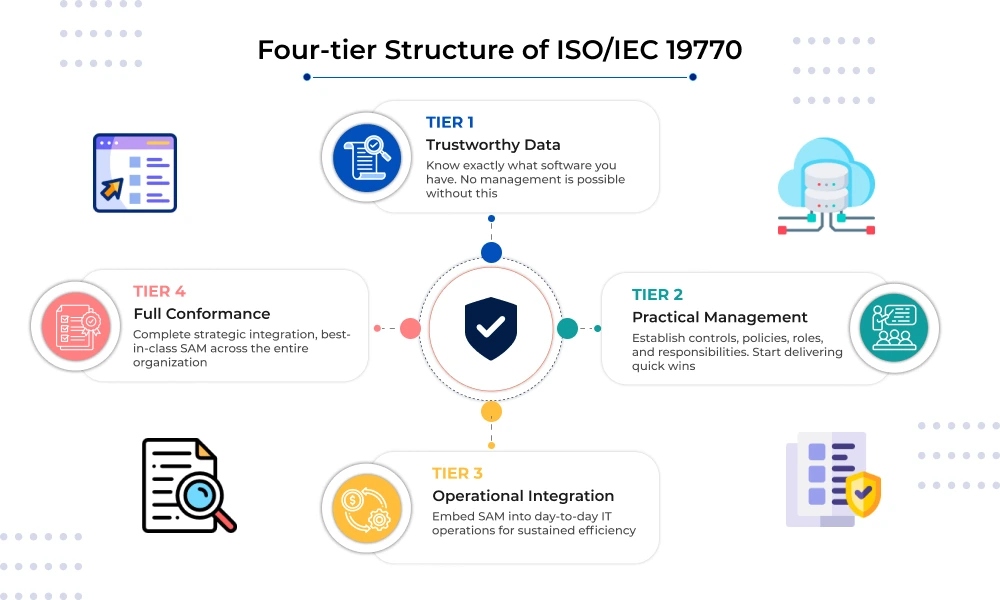
- Tier 1 – Trustworthy Data: Know exactly what software you have. No management is possible without this
- Tier 2 – Practical Management: Establish controls, policies, roles, and responsibilities. Start delivering quick wins
- Tier 3 – Operational Integration: Embed SAM into day-to-day IT operations for sustained efficiency
- Tier 4 – Full Conformance: Complete strategic integration, best-in-class SAM across the entire organization
Each tier builds on the previous one and can be independently certified. The standard applies to organizations of any size or sector, covers all software types – executable, non-executable, on-premises, cloud, and SaaS, and remains the benchmark for any organization serious about governance, compliance, and cost control.
Software Asset Management Best Practices
Getting SAM right requires more than good intentions. These eight processes serve as the practical underpinning of any successful SAM strategy.
Centralize Your SAM Program
When SAM is scattered, information gaps emerge. With only one SAM program, you have only one source of all the facts about your software assets.
- Assign clear ownership: a dedicated SAM team or manager
- Consolidate all asset data into a single platform
- Align SAM with IT, finance, and procurement functions
Keep your Software Inventory Current
Outdated inventory information is just as dangerous as having no inventory at all. Continuous discovery means you will always have the most up-to-date information about what is installed and who uses it.
- Automate discovery: don’t rely on manual tracking
- Track versions, license types, and assigned users
- Flag new installations in real time
Use Dedicated SAM Tooling
Spreadsheets aren’t enough. SAM tools automate all processes related to discovering, tracking licenses, and compliance monitoring.
- Look for real-time dashboards and automated alerts
- Ensure integration with ITSM and procurement systems
- Prioritize tools that support SaaS and cloud environments
Conduct Regular Software Audits
Internal audits discover compliance violations, unused licenses, and unauthorized installation issues before they become costly.
- Schedule audits quarterly: not just before vendor reviews
- Cross-reference deployments against entitlements
- Document findings and act on them promptly
Define Clear Licensing Policies
Without established policies, software acquisition is reactionary and haphazard. Clear policies avoid overbuying and non-compliance.
- Cover procurement, deployment, usage, and retirement
- Define who can approve software purchases
- Enforce EULA (End User License Agreement) compliance across all teams
Optimize Licensing Agreements
SAM data gives you real negotiating power. Use it to renegotiate contracts, eliminate unused tiers, and align spend with actual usage.
- Review agreements before every renewal cycle
- Consolidate vendors where possible to increase leverage
- Shift to usage-based models where it makes financial sense
Top Software Asset Management Tools to Consider in 2026
Here are some of the leading SAM software solutions businesses rely on to gain visibility into software assets, optimize licensing, and reduce unnecessary spending.
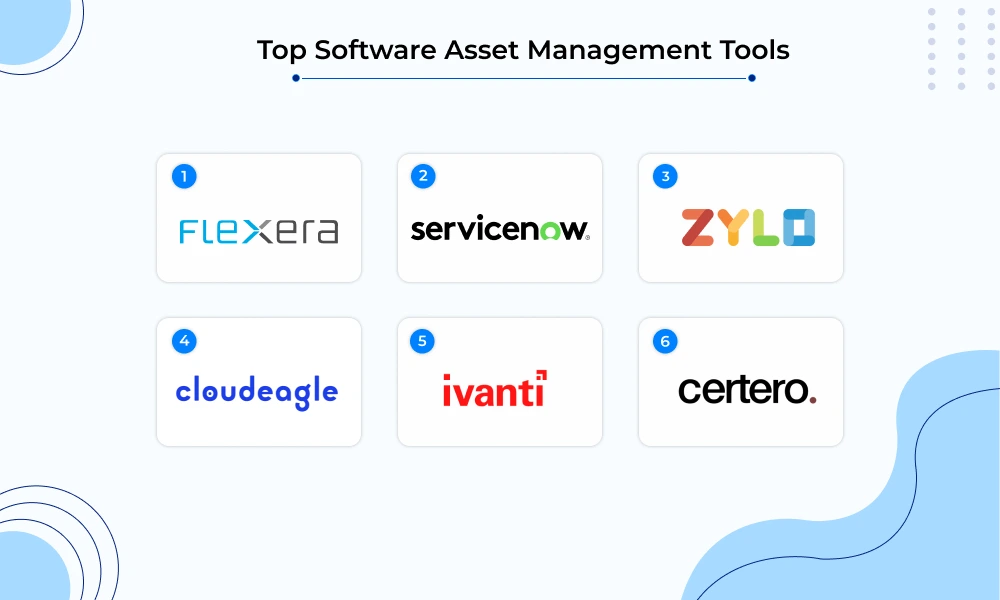
1. Flexera
Flexera is one of the most established names in software asset management, offering comprehensive visibility across on-premises, cloud, and SaaS environments. Its advanced license optimization capabilities help organizations reduce software waste while maintaining compliance with vendor agreements.
Advantages:
- Comprehensive software discovery and inventory management
- Strong license compliance and optimization capabilities
- Excellent multi-cloud visibility
- Seamless integration with ITSM platforms
Limitations:
- Complex implementation process
- Steeper learning curve for new users
- Premium pricing compared to smaller alternatives
Best For: Large enterprises managing complex hybrid and multi-cloud environments.
2. ServiceNow SAM
ServiceNow combines software asset management with workflow automation, enabling businesses to manage licenses, track software usage, and streamline compliance activities from a centralized platform.
Advantages:
- Powerful automation capabilities
- Strong ITSM and CMDB integration
- Real-time software asset tracking
- Excellent audit readiness features
Limitations:
- High implementation costs
- Requires experienced administrators
- May be excessive for small businesses
Best For: Organizations already using the ServiceNow ecosystem.
3. Zylo
Zylo specializes in helping organizations manage rapidly growing SaaS portfolios. With access to one of the industry’s largest SaaS benchmarking databases, this SAM software enables businesses to uncover unused licenses and improve renewal negotiations.
Advantages:
- Deep SaaS spend visibility
- AI-powered license optimization
- Strong renewal management capabilities
- Extensive benchmarking data
Limitations:
- Limited focus on traditional on-premises software assets
- Less suitable for organizations requiring extensive license compliance management
Best For: Enterprises focused on SaaS management and spend optimization.
4. CloudEagle
CloudEagle combines SaaS management with procurement support, helping businesses identify unused subscriptions, negotiate better vendor contracts, and improve software utilization.
Advantages:
- AI-driven optimization recommendations
- Vendor negotiation support
- Extensive SaaS integrations
- Strong focus on cost savings
Limitations:
- Relatively newer market entrant
- Limited native support for on-premises asset management
Best For: Mid-sized organizations seeking SaaS cost optimization.
5. Ivanti Neurons for ITAM
Ivanti provides end-to-end visibility into software and hardware assets, helping businesses track assets from procurement to retirement while improving compliance and reducing operational risks.
Advantages:
- Full asset lifecycle management
- Real-time asset discovery and tracking
- Strong automation capabilities
- Effective compliance monitoring
Limitations:
- The interface can feel complex for new users
- Advanced features may require additional training
Best For: Organizations looking for complete IT asset lifecycle management.
6. Certero
The SAM software provides complete visibility for software licensing, SaaS subscriptions, hardware inventory, and even cloud infrastructure. It helps businesses track software usage, eliminate waste, and maintain audit readiness across hybrid infrastructures.
Advantages:
- Comprehensive asset discovery through agent and agentless scanning
- Automated license management and compliance tracking
- Unified dashboard for software, hardware, and SaaS assets
- Strong ITSM and CMDB integrations
Limitations:
- Fewer publicly available user reviews compared to larger competitors
- Less brand recognition than vendors such as Flexera or ServiceNow
Best For: Enterprises that want software, SaaS, and IT asset management integrated into a single system.
These tools serve diverse purposes based on their target audience. The ones dealing with intricate software environments can opt for either Flexera or ServiceNow, whereas companies focusing on the Software as a Service industry will find Zylo and CloudEagle more helpful. If you want to have a solution that deals with IT asset lifecycle management, then Ivanti is the right one. And if you want something customized, specifically meant for the working of your organization, it’s time to contact a custom software development company.
Picking the Right SAM Tool: What Actually Matters
Not all SAM software are alike. And picking the wrong one can cost you an expensive system that fails to monitor your software adequately. Below is a checklist of key considerations before you make the investment:
Non-negotiable features:
- Automated discovery of software within on-premises, cloud, and SaaS platforms
- Real-time license tracking and entitlement reconciliation
- Provisioning and de-provisioning based on roles
- Monitoring usage with dashboard analytics
- Contract and renewal management with automated alerts
- Vendor management capabilities for negotiation support
- Security monitoring and access control by roles
- Integration with existing ITSM solutions such as ServiceNow or Jira
What to assess in a vendor:
- Experience – proven track record, verifiable customer references
- Scalability – can it grow as your software portfolio grows?
- Integration depth – does it connect cleanly with your existing IT infrastructure?
- Support quality – implementation help, training resources, ongoing support
- Pricing model – evaluate total cost against ROI, not just the license fee
Before purchasing, ask yourself:
- Do you have a multi-cloud portfolio? You will require software that manages the licensing of all three clouds, namely AWS, Azure, and GCP
- Are audits a common practice for you? Automated reporting will become a priority
- Are you audit-prone? Prioritize automated compliance reporting
- Is shadow IT a problem? Discovery capability becomes your most critical feature
Wrapping Up
Software will continue evolving, becoming increasingly complex, and introducing new players, subscriptions, cloud deployments, and AI-driven tools into the mix, all of which are unbeknownst to the IT department.
The trajectory is not changing. What is changing is whether your business is ready for the challenge.
SAM isn’t a one-time project or a compliance checkbox. It’s an ongoing operational discipline, one that pays back in reduced audit risk, recovered budget, and a software environment that’s actually under control.
If there’s one thing this entire guide comes down to, it’s this — you can’t control what you don’t know exists. Get visibility first. Everything else follows from there.









 Sales Enquiries:
  Business queries:
  HR:
HR: 


