


 Healthcare App Development Services
 Real Estate Web Development Services
 E-Commerce App Development Services
 E-Commerce Web Development Services
 Blockchain E-commerce Development Company
 Fintech App Development Services
 Fintech Web Development
 Blockchain Fintech Development Company
 E-Learning App Development Services
 Restaurant App Development Company
 Mobile Game Development Company
 Travel App Development Company
 Automotive Web Design
 AI Traffic Management System
 AI Inventory Management Software
 AI Development Company
  ChatGPT integration services
  AI Integration Services
  Generative AI Development Services
  Natural Language Processing Company
 Machine Learning Development
  Machine learning consulting services
  Blockchain Development
  Blockchain Software Development
  Smart Contract Development Company
  NFT Marketplace Development Services
  Asset Tokenization Company
 DeFi Wallet Development Company
 Mobile App Development
  IOS App Development
  Android App Development
  Cross-Platform App Development
  Augmented Reality (AR) App Development
  Virtual Reality (VR) App Development
  Web App Development
  SaaS App Development
 Flutter
  React Native
  Swift (IOS)
  Kotlin (Android)
  Mean Stack Development
  AngularJS Development
  MongoDB Development
  Nodejs Development
  Database Development
 Ruby on Rails Development
 Expressjs Development
  Full Stack Development
  Web Development Services
  Laravel Development
  LAMP Development
  Custom PHP Development
  .Net Development
  User Experience Design Services
  User Interface Design Services
  Automated Testing
  Manual Testing
  Digital Marketing Services
 Ride-Sharing And Taxi Services
 Food Delivery Services
 Grocery Delivery Services
 Transportation And Logistics
 Car Wash App
 Home Services App
 ERP Development Services
 CMS Development Services
 LMS Development
 CRM Development
 DevOps Development Services
 AI Business Solutions
 AI Cloud Solutions
 AI Chatbot Development
 API Development
 Blockchain Product Development
 Cryptocurrency Wallet Development
 About Talentelgia
  Our Team
  Our Culture
 Healthcare App Development Services
 Real Estate Web Development Services
 E-Commerce App Development Services
 E-Commerce Web Development Services
 Blockchain E-commerce
Development Company
Blockchain E-commerce
Development Company Fintech App Development Services
 Finance Web Development
 Blockchain Fintech
Development Company
Blockchain Fintech
Development Company E-Learning App Development Services
 Restaurant App Development Company
 Mobile Game Development Company
 Travel App Development Company
 Automotive Web Design
 AI Traffic Management System
 AI Inventory Management Software
 AI Development Company
 ChatGPT integration services
 AI Integration Services
 Machine Learning Development
 Machine learning consulting services
 Blockchain Development
 Blockchain Software Development
 Smart contract development company
 NFT marketplace development services
 IOS App Development
 Android App Development
 Cross-Platform App Development
 Augmented Reality (AR) App
Development
Augmented Reality (AR) App
Development Virtual Reality (VR) App Development
 Web App Development
 Flutter
 React
Native
React
Native Swift
(IOS)
Swift
(IOS) Kotlin (Android)
 MEAN Stack Development
 AngularJS Development
 MongoDB Development
 Nodejs Development
 Database development services
 Ruby on Rails Development services
 Expressjs Development
 Full Stack Development
 Web Development Services
 Laravel Development
 LAMP
Development
LAMP
Development Custom PHP Development
 User Experience Design Services
 User Interface Design Services
 Automated Testing
 Manual
Testing
Manual
Testing About Talentelgia
 Our Team
 Our Culture
One thing is for certain for any project manager and team: no matter what, how much detail goes into a project plan, one or more of its stakeholders will at some point make a request for minor changes. Those alterations add up, leading to cost overruns and schedule delays for the project. In terms of project management, scope creep is defined as an expansion of a project’s base plan beyond what has been approved, which affects resources, schedule, budget and results. Additional or new features/requirements can fall under scope expansion.
A project manager uses a scope creep management plan with the change control process that guides the project team and stakeholders in controlling scope creep. Scope management entails writing a scope statement, work breakdown structure (WBS) documents, a project plan in detail, a solid change control process of raising issues, and stakeholder communications throughout the whole project cycle.
Dealing with scope creep is important because it can be the difference between project goals achieved and project failure.
Understanding Scope Creep In Project Management
Scope creep occurs when a project’s requirements grow beyond the original plan without proper approval or adjustment in budget, time, or resources. It starts innocently— a “quick tweak” here, and “extra button” there— until the project becomes a bloated version of its former self, drifting far away from its initial goals. Unlike planned growth, scope creep slips in through informal chats, unclear expectations, or unchecked stakeholder enthusiasm. The result? Deadlines slip, budgets expand, and team morale quivers.
Scope Creep vs. Scope Change
Many managers confuse these two, but understanding the distinction is the key to professional project delivery. One is a failure of process, while the other is a controlled evolution.
| Factor | Scope Creep | Scope Change |
| Approval | Unofficial and undocumented. | Formally reviewed and approved. |
| Resources | No extra budget or time added. | Budget and timeline adjusted accordingly. |
| Documentation | Happens via “Slack” or “Watercooler” chats. | Logged in a Change Request Form. |
| Impact | Drains team morale and kills ROI. | Aligns the project with new business goals. |
| Communication | Usually hidden from key stakeholders. | Transparently discussed with the whole team. |
Top 7 Most Common Causes of Scope Creep
If you consider the scope of a project as a defined set of boundaries, it’s easy to understand how those bounds can be tested and even broken if you’re not paying close enough attention.
Basic project management skills, such as planning, task management, and scheduling, are not all that there is to understand in project management. It’s the nuts and bolts of people management and managing expectations.
Everyone has a subjective idea of what they wish your project to look like, which is a potential source of scope creep. The most common causes of scope creep are:
1. Lack of a Defined Project Scope
If you don’t have a crystal-clear boundary of what is in and what is out, the project becomes a vacuum that sucks in every random idea. Without a documented Scope Statement, there is no “source of truth” to refer back to when a client asks for a “quick favour.”
The Reality: A project without a scope isn’t a project; it’s a wishlist that never ends.
2. Poor Communication & “Invisible” Agreements
Scope creep thrives in the shadows of verbal agreements and casual Slack messages. When requirements are discussed in meetings but never formally documented and shared with the technical team, “expectations” begin to diverge from “execution.”
The Reality: If a requirement isn’t written down and confirmed by both parties, it doesn’t exist—until it becomes a problem at the deadline.
3. Unclear or Shifting Project Objectives
When the “North Star” of a project is vague (e.g., “Make the app better”), the team has no way to measure if a new request actually helps reach the goal. Without SMART (Specific, Measurable, Achievable, Relevant, Time-bound) objectives, the project becomes a playground for “nice-to-have” features that add no real value.
The Reality: Vague goals lead to bloated software. Every feature should be able to answer the question: “Does this directly achieve our primary objective?”
4. Unrealistic Expectations & The “Yes-Man” Syndrome
Sometimes, the creep starts at the sales stage. If a project is sold with a realistic timeline or an underpowered budget, the team is forced to “cram” extra work into a fixed window to keep the client happy.
The Reality: Setting “unrealistic” goals from Day 1 creates a culture where boundaries are ignored, leading to a “forced” scope creep that causes total project burnout.
5. “Too Many Cooks”: Stakeholder Overload
In 2026, enterprise projects often involve multiple departments: Marketing, IT, Legal, and UX. When there are too many stakeholders and no Single Point of Contact (SPOC), the project becomes a victim of “Design by Committee.”
The Reality: Every department has a “top priority.” Without a strong Project Manager to filter these requests, the scope expands to please everyone, resulting in a product that serves no one well.
6. Ineffective (or Non-Existent) Change Control
A project should evolve, but it must do so through a formal Change Control Process. If anyone can call a developer and ask for a change without a formal “Change Request” form, your budget is leaking.
The Reality: Without a process to evaluate the impact of a change (in terms of cost and time), you are essentially giving away your services for free.
7. The “Eleventh Hour” Feedback Loop
Last-minute feedback from senior executives who haven’t been involved in the process is a classic scope-killer. These “Drive-by Opinions” often result in massive structural changes just days before launch.
The Reality: Late-stage changes are 10x more expensive than early-stage ones. Without a “Lock-down Date” for feedback, the project will never actually cross the finish line.
The True Cost of Scope Creep: How It’s a Project Killer?
Scope creep isn’t just an annoyance; it’s a catastrophic financial and operational risk that derails projects and burns profits. According to the Project Management Institute (PMI), unauthorised scope expansion is a leading cause of project failure, affecting nearly 50% of all enterprise projects.
When a project drifts, it creates a “domino effect” that can destabilise an entire organisation. Here is why failing to control the creep is a high-stakes gamble.
1. Financial Decay
Every “small request” consumes labour hours that weren’t quoted. If you are a service provider, you are essentially working for free. For internal teams, this translates to budget overruns.
With the rising cost of specialised talent, even a 10% increase in undocumented work can flip a profitable project into a net loss.
2. Technical Debt
When you add features without adding time, something has to give. Usually, it’s Testing and QA.
Developers rush to implement “bonus” features and skip the rigorous security checks required in 2026. This leads to fragile code, “spaghetti” architecture, and a product that is riddled with bugs upon launch.
3. “Burnout Culture” & Talent Attrition
Scope creep is a primary driver of burnout among developers and managers. When the “finish line” is constantly moved, the team loses the psychological win of completing a task. High-performing talent will not stay in an environment where expectations are a moving target. The cost of replacing a senior project lead in 2026 is often 2x their annual salary when you factor in recruitment and lost institutional knowledge.
4. Dilution of the Core Value Proposition
When you try to make a product do “everything for everyone,” it ends up doing nothing well. This is known as “Feature Bloat.” The project’s original goal gets buried under a mountain of secondary features. This confuses the end-user and weakens the product’s market fit, leading to poor adoption rates.
5. Stakeholder Distrust & Brand Damage
Ironically, by trying to “please” a client with extra freebies, you often end up ruining the relationship. When the project inevitably runs late because of the extra work, the client forgets they asked for the extras—they only remember that you missed the deadline. This creates a cycle of blame, leads to “bad blood,” and can result in legal disputes or a permanent stain on your professional reputation.
Real-World Examples of Scope Creep
In the software development sector, agile methods are often used for project management. Agile projects are flexible and more adaptable, making them conducive to software development. But it’s also far more common for scope creep risks to happen. Whether your team uses agile, kanban, or scrum, all flexible project management approaches will want to put processes in place (often with the help of tools) that keep work on track and focused and prevent scope creep
The “Denver International Airport” Baggage System
This remains the gold standard for scope creep in technical engineering. What began as a plan for a revolutionary automated baggage system for one terminal was expanded mid-construction to cover the entire airport. Stakeholders kept adding “necessary” complexity—more carts, faster speeds, and additional track loops—without reassessing the underlying software’s limits.
The Damage: The project ran $2 billion over budget and delayed the airport’s opening by 16 months. The system was eventually scrapped entirely.
The “California High-Speed Rail” Project
A modern example of “political scope creep.” Initially approved by voters as a $33 billion high-speed link between L.A. and San Francisco, the project’s scope was repeatedly altered to appease local municipalities and environmental groups. Hundreds of miles of “re-routing” were added to include smaller cities that weren’t in the original high-speed vision.
The Damage: As of 2024-2026 reports, the cost has ballooned to over $128 billion, with the timeline pushed back by decades.
The “Healthcare.gov” Launch
When the U.S. government launched its health insurance exchange, it became a victim of “Late-Stage Feature Bloat.” New regulations and “user-friendly” features were added just weeks before the deadline, requiring massive backend changes that the original architecture couldn’t handle.
The Damage: The site famously crashed on launch day, requiring an additional $200 million in “emergency repairs” to reach basic functionality.
How To Prevent & Manage Scope Creep?
Scope creep doesn’t have to win. Recent PMI and expert guidance shows structured prevention cuts risks by up to 50%. Here’s an easy-to-follow plan using proven tactics from project pros and modern tools.
1. The “Ironclad” Discovery Phase
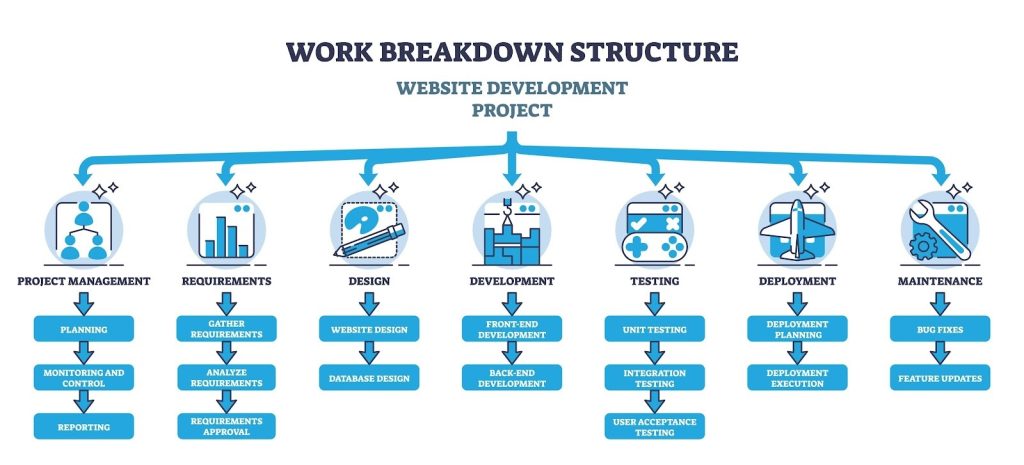
Spend extra time at the start. Create a Work Breakdown Structure (WBS) that lists exactly what is included—and more importantly, what is explicitly excluded.
2. Implement a Formal Change Control Process
Establish a rule: “No request is too small for a Change Order.” If the client wants a new feature, they must sign a document that acknowledges the impact on the price and the launch date.
3. Set a “Buffer” Budget
In 2026, smart managers include a 10-15% Contingency Buffer in their initial quotes. This allows for minor pivots without needing a board meeting for every $500 change.
4. Practice “Active Transparency”
Don’t hide the impact of a request. Say: “We can absolutely add that feature, but it will move our launch date by 4 days. Would you like to proceed or keep it for Phase 2?”
Conclusion
Basically, any project is bound to face changes owing to the constantly changing client needs. This is why project managers need to be vigilant of scope creep throughout the execution phase. Straightforward and easy scope creep is a ticking bomb for project managers as they say that a good project manager knows how to detect scope creep and an even better one will have the plan ready on when to accept scope creep or not. Using the proper techniques enables managers to avoid the perils of uncontrolled scope creep. For more information, contact our experts at Talentelgia today!












 Write us on:
  Business queries:
  HR:
HR: 


