



 Healthcare App Development Services
 Real Estate Web Development Services
 E-Commerce App Development Services
 E-Commerce Web Development Services
 Blockchain E-commerce Development Company
 Fintech App Development Services
 Fintech Web Development
 Blockchain Fintech Development Company
 E-Learning App Development Services
 Restaurant App Development Company
 Mobile Game Development Company
 Travel App Development Company
 Automotive Web Design
 AI Traffic Management System
 AI Inventory Management Software
 Machine Learning Development
 ChatGPT integration services
  AI Development Company
  AI Integration Services
  Generative AI Development Services
  Natural Language Processing Company
 Mobile App Development
  IOS App Development
  Android App Development
  Cross-Platform App Development
  Augmented Reality (AR) App Development
  Virtual Reality (VR) App Development
  Web App Development
  SaaS App Development
 Flutter
  React Native
  Swift (IOS)
  Kotlin (Android)
  Mean Stack Development
  AngularJS Development
  MongoDB Development
  Nodejs Development
  Database Development
 Ruby on Rails Development
 Expressjs Development
  Full Stack Development
  Web Development Services
  Laravel Development
  LAMP Development
  Custom PHP Development
  .Net Development
  User Experience Design Services
  User Interface Design Services
  Automated Testing
  Manual Testing
  Digital Marketing Services
 Ride-Sharing And Taxi Services
 Food Delivery Services
 Grocery Delivery Services
 Transportation And Logistics
 Car Wash App
 Home Services App
 ERP Development Services
 CMS Development Services
 LMS Development
 CRM Development
 DevOps Development Services
 AI Business Solutions
 AI Cloud Solutions
 AI Chatbot Development
 API Development
 Blockchain Product Development
 Cryptocurrency Wallet Development
 About Talentelgia
  Our Team
  Our Culture
 Healthcare App Development Services
 Real Estate Web Development Services
 E-Commerce App Development Services
 E-Commerce Web Development Services
 Blockchain E-commerce
Development Company
Blockchain E-commerce
Development Company Fintech App Development Services
 Finance Web Development
 Blockchain Fintech
Development Company
Blockchain Fintech
Development Company E-Learning App Development Services
 Restaurant App Development Company
 Mobile Game Development Company
 Travel App Development Company
 Automotive Web Design
 AI Traffic Management System
 AI Inventory Management Software
 AI Development Company
 ChatGPT integration services
 AI Integration Services
 Machine Learning Development
 Machine learning consulting services
 Blockchain Development
 Blockchain Software Development
 Smart contract development company
 NFT marketplace development services
 Asset tokenization companies
 DeFi Wallet Development Company
 IOS App Development
 Android App Development
 Cross-Platform App Development
 Augmented Reality (AR) App
Development
Augmented Reality (AR) App
Development Virtual Reality (VR) App Development
 Web App Development
 Flutter
 React
Native
React
Native Swift
(IOS)
Swift
(IOS) Kotlin (Android)
 MEAN Stack Development
 AngularJS Development
 MongoDB Development
 Nodejs Development
 Database development services
 Expressjs Development
 Full Stack Development
 Web Development Services
 Laravel Development
 LAMP
Development
LAMP
Development Custom PHP Development
 User Experience Design Services
 User Interface Design Services
 Automated Testing
 Manual
Testing
Manual
Testing About Talentelgia
 Our Team
 Our Culture
PropTech innovation is revolutionizing the real estate industry as it marries property services with technology. The today-ubiquitous term PropTech is shorthand for property technology, and it describes digital tools that make buying, selling, renting, managing, or investing in real estate faster and easier. From intelligent property management solutions to data-led platforms, the development of PropTech is revolutionising old-school processes in real estate and taking them into a faster, smarter future.
In today’s digital-first era, relying on manual systems and paperwork is no longer an option for businesses…and for a good reason! And this is what the proptech software development plays an essential role in. It allows real estate companies to automate processes, streamline customer interactions, and analyze data for better decision-making. From a Real estate app development company’s mobile app for listing properties to the back-end infrastructure for keeping track of assets, PropTech innovations help companies keep pace.
Another budding industry is proptech SaaS development, meaning property tech companies can gain access to powerful software suites through the cloud. These include cost-efficient, scalable, and simple-to-manage solutions suitable for startups as well as large enterprises. As the need for more intelligent property solutions increases, the speed of development has been one of the key innovation factors in real estate.
Overall, the development of PropTech closes the technology–real estate gap with smarter ways to manage properties, involve customers, and expand businesses in a changing market.
What Is PropTech Development?
‘PropTech development models – Building actual technology systems actually designed for proper ty / real estate.’ The focus is on making the buying, selling, renting, and managing of property — as well as how people connect to invest in them — more efficient using digital tools like web platforms, mobile apps, and cloud-based software. Through proptech software development, interior and architecture companies automate tasks, reduce manual work hours, and deliver the prompter more see-through services to their clients.
Further, Proptech SaaS growth also means companies can deliver cloud-based real estate offerings at scale with minimal maintenance and access. These apps also help to clip and clean properties, make sense of data, and enhance user experience for businesses without burning a hole in their pocket with expensive infrastructure. In sum, proptech is a technological development that meets at the crossroads of technology and real estate with a purpose to optimize the systems in which properties are operated (now) for enhanced efficiency purposes, while being prepared as future-proof.
How PropTech Is Transforming the Real Estate Industry
PropTech is changing real estate by making processes faster, smarter, and more accessible. From property searches to management, technology is simplifying every stage of the real estate journey.
- Operations Simplification: PropTech enables smoother, easier real estate processes by automating property listings and transactions (leasing), payments, and documentation to cut down on manual intervention and, by extension, the costs of operations.
- Enhanced Customer Experience: Proptech app development allows prospective buyers and renters to conveniently browse properties, tour them virtually, and discuss details with landlords using intuitive digital applications.
- Say It With Numbers: Proptech tools use analytics and live data to guide real estate firms toward more informed decisions about pricing, investment, and market trends.
- Remote property management: Proptech can assist building owners and managers in overseeing a property from anywhere, providing them with the ability to make real estate operations more flexible and efficient.
- Increased Visibility and Security: With more data stored electronically, automated processes on secure platforms help to increase visibility by helping to ensure clarity of transactions, accuracy of reports, and greater compliance with real estate activity.
Key Features of PropTech Software Development
PropTech software includes smart features that simplify property management and real estate transactions. These capabilities help users save time, reduce manual work, and make informed decisions.
- Property Centralization: PropTech technology helps keep all property operations in one place for ease of management, reducing the need for businesses to balance listings, tenants, lease agreements, payments, and maintenance requests across multiple sites. This eliminates the reliance on various tools and adds efficiency in operations.
- Incessibilities: Repetitive tasks, including the notification system (reminder of rent due), invoices, record uploads, and reports, will be automated thanks to proptech software development. This not only gives you a lot of Anpanman SNES downloads, but it also saves time and decreases the likelihood of human error.
- Sophisticated Data Analytics: PropTech platforms generate and process immense amounts of real estate information that help in understanding occupancy levels, history of pricing, performance of revenue, including customer behavior. These are insights that allow companies to make data-driven decisions and foster greater profitability.
- Cloud-based accessibility: Cloud-reliant PropTech systems let users log in to multi-level platforms from anywhere and anytime. This enables remote work, simple scalability, automated updates, and lower infrastructure expenses.
- User-Friendly: PropTech software is designed with user-friendly interfaces for property managers, agents, and end users. Users need to have a smooth experience when using tools, which ultimately increases adoption and customer satisfaction.
Use Cases of PropTech Software Development
PropTech software development transforms how real estate businesses operate by enabling smarter, faster, and more transparent processes. Its use cases span across management, sales, leasing, and analytics, driving innovation throughout the industry.
- Property Listing Platforms: These platforms help real-estate companies showcase residential and commercial properties with rich details, including information on the property, images, videos, price range, online booking, along with location and area-based search options to reduce time on finding a perfect place.
- Property Management Systems: These are tools that landlords and property managers use to onboard a tenant, manage the lease, and collect rent in one app.
- Real Estate CRM Software: PropTech CRM platforms assist agents in managing leads, recording client interactions, scheduling follow ups and nurturing realtor-client relationships to drive enhanced sales results and user experience.
- Smart Building and Facility Management: PropTech solutions combined with IoT devices can efficiently track energy consumption, security system operations, lighting or heating and cooling systems to ensure smart facility management and reduced operational costs.
- Real Estate Investment Platforms: These enable investors with the tools and analysis they need to better understand their positions, portfolios, financial forecasts, and risk so that they can make considerably more informed investment decisions!
PropTech SaaS Development Models
The PropTech SaaS business model is all about how cloud-based real estate software is created, provided, and used as a commercial product. Such models enable real estate enterprises to provide more dynamic, scalable, and cost-effective solutions without having to invest heavily in infrastructure.
1. Subscription-Based Model:
This is your most common PropTech SaaS model: the simple monthly or annual payment to download and use the software. So it’s predictable revenue for businesses, and customers can have their plans based on features, or the number of users, or property volume.
2. Freemium Model:
In this scheme, core features are available for free, and other tools require a premium purchase. With this Freemium approach in place, #PropTechSaaS optimizes your potential reach of new users while giving you the tools to convert them into paying ones as they grow.
3. Tiered Pricing Model:
Hierarchical pricing via basic, medium, and high levels of service. Each level comes with a unique list of features, allowing businesses that are small-scale or large in size to easily choose which plan suits their business needs.
4. Pay-Per-Use Model:
Pricing is consumption-based, like property listings, transactions, or API calls. This model is great for businesses that are flexible and don’t want to pay for more than they need.
5. Enterprise SaaS Model:
Targeted to large real estate businesses, this plan includes custom functionalities, integrations, personal support, and advanced security. Price is typically bespoke for business requirements and volume.
In the end, PropTech SaaS models of development allow real estate groups to provide modern, scalable cloud solutions that can scale right alongside their business—and, at the same time, provide flexibility and a far better user experience.
Core Technologies Used in PropTech Development
Proptech building leverages various modern technologies to build intelligent, safe, and scalable real estate assets. These tech solutions contribute to simplifying procedures, and make the user experience enhanced, including becoming data-led led giving visibility at all times throughout a property lifecycle.
Cloud Computing:
Collaboration with cloud As PropTech SaaS is developed in the cloud, it offers secure data storage, facilitates easy remote access anytime and anywhere, scales easily based on user needs, and automatically updates software to the latest versions. They lower the price of infrastructure and allow real-estate companies to control properties and people remotely.
AI and ML:
Artificial Intelligence was above the market in terms of being a buzzword. It’s a category into which Machine Learning falls.
AI and ML are applied for property recommendations, price predictions, chatbots, fraud prevention tools, as well as to understand customer behavior. These tech are used to deliver experiences that are personal and efficient.
Read More: AI In Commercial Real Estate
Big Data and Analytics:
PropTech platforms go through huge amounts of real estate data in order to give insights on market trends, basis occupancy rates and pricing strategies, as well as investment performance, so that businesses can make decisions.
Internet of Things (IoT):
As for smart buildings, IoT devices are implemented to monitor energy consumption levels, security systems, lighting, and heating/cooling, as well as required maintenance of the equipment – in other words, more intelligent property management and facility management.
Read More: How To Develop an IoT Application? Features & Cost
Blockchain Technology:
Blockchain makes real estate more transparent and secure with features like encrypted digital records, tamper-proof documents, and smart contracts.
Mobile and Web Technologies:
Contemporary Real Estate Web Development Services and apps help make beautiful, user-friendly tools for looking at property, managing your home or investment, and communicating everywhere you go.
These key technologies are the twin engines driving PropTech development, innovation, and efficiency in real estate.
Challenges in PropTech Software and SaaS Development
PropTech software and SaaS development bring a lot of possibilities, but it also lead businesses and developers to many common problems that need to be solved in order to provide them with successful and scalable technology.
Data Security and Privacy:
Sensitive details such as personal information, financial report, and property data are managed by PropTech platforms. Achieving strong data security, compliance, and protection is a serious challenge in PropTech SaaS development.
Integration with Legacy Systems:
The truth is, a lot of the real estate industry continues to operate on antiquated systems and with manual processes. Modern PropTech software may be difficult, time-consuming, and expensive to integrate with these legacy systems.
Scalability and Performance Issues:
As user interest expands, PropTech platforms must scale to handle increasing volumes of data and users without compromising performance. Building a platform that can grow efficiently is therefore a critical challenge.
User Adoption and Change Management:
Real estate professionals may be slow to adopt new technologies out of unfamiliarity or being set in their ways. It’s critical that user interfaces be intuitive and that proper onboarding is done.
Regulatory and Compliance Requirements:
Real estate laws and interpretations are different from state to state and can change. PropTech software needs to be compliant with local laws concerning property transactions, data storage, and financial activities.
Customization vs. Standardization:
Every real estate enterprise will have its own set of requirements, so being able to accommodate custom features into a standard SaaS offering without raising the development level can be difficult.
An approach to these challenges cannot be improvised: it requires thorough planning and sound technology choices, an extensive knowledge of both real estate operations and software development.
How to Choose the Right PropTech Development Partner
It is important to select a proper PropTech development provider that lets you develop a trustworthy and scalable real estate solution. A good partner will have that real estate experience and understand property workflows, user expectations, and industry pain points. This domain knowledge helps to get the system practical and down to earth, adhere to standards, and reflect real business needs rather than being just technically fine.
You also should consider the partner’s competence in proptech software development and proptech SaaS development. The perfect team would possess expertise in newer technologies, including cloud computing, data analytics, and secure systems design. Their skills in scalable and flexible platform design will ensure that your PropTech solution scales seamlessly as user demand and data volume grow.
Last but not least are communication, security standards, and long-term support that will be essential in finding the right partner. Your PropTech development partner should be a good communicator, have strong data protection practices, and provide continued maintenance after your product is launched. This guarantees reliable operation, great user experience, and finally the success on the market for real estate.
Conclusion
The future of PropTech development is changing the way business is conducted in real estate by implementing faster, smarter, and more transparent digital solutions. Whether through proptech tools that are automating daily tasks, to proptech SaaS offerings that provide real estate professionals with cloud-based, scalable platforms, technology is enabling companies in the industry to be more efficient while cutting costs and improving customer service. As we've brought up through this piece, PropTech is not an optional upgrade anymore – it’s a survival measure in an industry that's moving at lightning speed.
The continued increase of PropTech development, thanks to sophisticated technologies such as AI, IoT, cloud computing, and data analysis, accelerates various possibilities for property management, investment, and customer services. There are challenges, such as data security, system integration, and user buy-in, but selecting the right development partner and the appropriate SaaS model can enable businesses to effectively address these challenges.

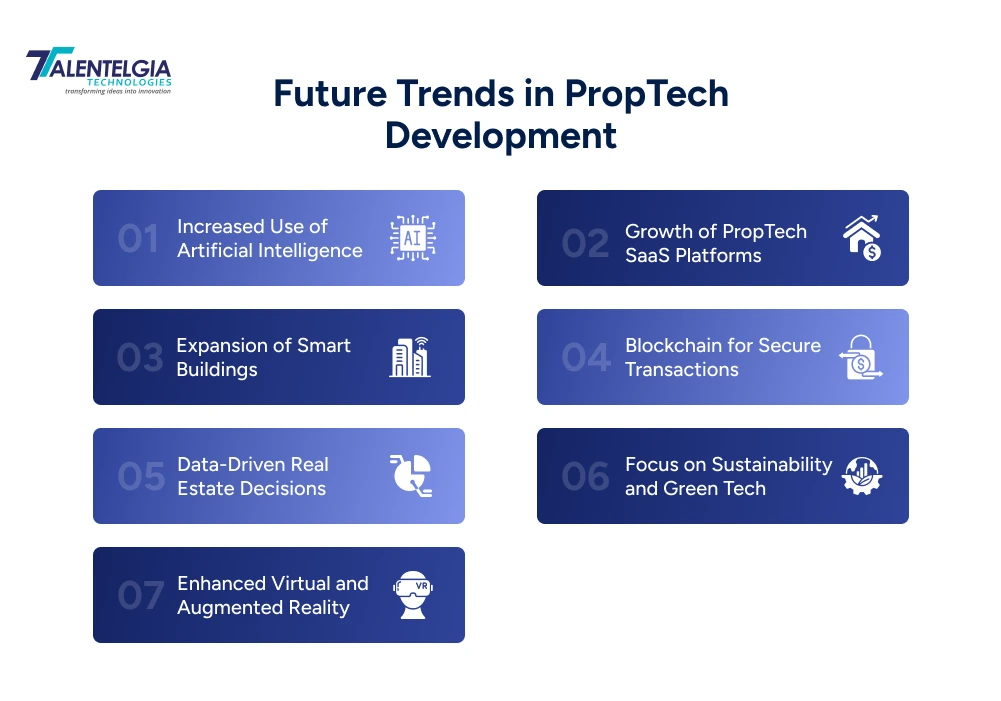
In the future, trends like smart buildings, blockchain-backed service transactions, and sustainable real estate are only going to help advance PropTech innovation even more. And with PropTech development now, real estate companies can secure their future and better understand market needs – unlocking their potential in the digital era.










 Sales Enquiries:
  Business queries:
  HR:
HR: 


