


 Healthcare App Development Services
 Real Estate Web Development Services
 E-Commerce App Development Services
 E-Commerce Web Development Services
 Blockchain E-commerce Development Company
 Fintech App Development Services
 Fintech Web Development
 Blockchain Fintech Development Company
 E-Learning App Development Services
 Restaurant App Development Company
 Mobile Game Development Company
 Travel App Development Company
 Automotive Web Design
 AI Traffic Management System
 AI Inventory Management Software
 AI Software Development
  AI Development Company
  AI App Development Services
  ChatGPT integration services
  AI Integration Services
  Generative AI Development Services
  Natural Language Processing Company
 Machine Learning Development
  Machine learning consulting services
  Blockchain Development
  Blockchain Software Development
  Smart Contract Development Company
  NFT Marketplace Development Services
  Asset Tokenization Company
 DeFi Wallet Development Company
 Mobile App Development
  IOS App Development
  Android App Development
  Cross-Platform App Development
  Augmented Reality (AR) App Development
  Virtual Reality (VR) App Development
  Web App Development
  SaaS App Development
 Flutter
  React Native
  Swift (IOS)
  Kotlin (Android)
  Mean Stack Development
  AngularJS Development
  MongoDB Development
  Nodejs Development
  Database Development
 Ruby on Rails Development
 Expressjs Development
  Full Stack Development
  Web Development Services
  Laravel Development
  LAMP Development
  Custom PHP Development
  .Net Development
  User Experience Design Services
  User Interface Design Services
  Automated Testing
  Manual Testing
  Digital Marketing Services
 Ride-Sharing And Taxi Services
 Food Delivery Services
 Grocery Delivery Services
 Transportation And Logistics
 Car Wash App
 Home Services App
 ERP Development Services
 CMS Development Services
 LMS Development
 CRM Development
 DevOps Development Services
 AI Business Solutions
 AI Cloud Solutions
 AI Chatbot Development
 API Development
 Blockchain Product Development
 Cryptocurrency Wallet Development
 About Talentelgia
  Our Team
  Our Culture
 Healthcare App Development Services
 Real Estate Web Development Services
 E-Commerce App Development Services
 E-Commerce Web Development Services
 Blockchain E-commerce
Development Company
Blockchain E-commerce
Development Company Fintech App Development Services
 Finance Web Development
 Blockchain Fintech
Development Company
Blockchain Fintech
Development Company E-Learning App Development Services
 Restaurant App Development Company
 Mobile Game Development Company
 Travel App Development Company
 Automotive Web Design
 AI Traffic Management System
 AI Inventory Management Software
 AI Software Development
 AI Development Company
 ChatGPT integration services
 AI Integration Services
 Machine Learning Development
 Machine learning consulting services
 Blockchain Development
 Blockchain Software Development
 Smart contract development company
 NFT marketplace development services
 IOS App Development
 Android App Development
 Cross-Platform App Development
 Augmented Reality (AR) App
Development
Augmented Reality (AR) App
Development Virtual Reality (VR) App Development
 Web App Development
 Flutter
 React
Native
React
Native Swift
(IOS)
Swift
(IOS) Kotlin (Android)
 MEAN Stack Development
 AngularJS Development
 MongoDB Development
 Nodejs Development
 Database development services
 Ruby on Rails Development services
 Expressjs Development
 Full Stack Development
 Web Development Services
 Laravel Development
 LAMP
Development
LAMP
Development Custom PHP Development
 User Experience Design Services
 User Interface Design Services
 Automated Testing
 Manual
Testing
Manual
Testing About Talentelgia
 Our Team
 Our Culture
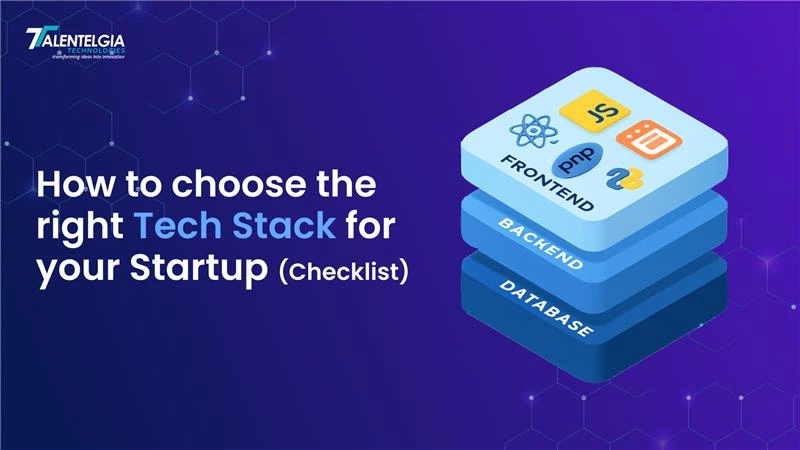
Tech stack for startups is perhaps one of the crucial decisions a founder will ever make in the early stage of product building. The tech you choose will significantly influence how quickly you can get to market, how easily your product can scale , and what it will cost to build and maintain over time. A good tech stack for startup scaling is a supportive one. It speeds up software development, increases performance, and minimizes future technical issues.
The best tech stack for startup success is a question that many founders are looking to answer; however, in reality, there’s no one-size-fits-all solution. What works great for SaaS app development may not work well for a mobile app, an e-commerce store, or even an MVP. Several considerations — including business objectives, budget, team experience, and future scalability — are key to selecting the most appropriate tech stack.
This guide dumbs down the process into an easy-to-use checklist you can do on your own in order to make an informed decision with confidence. Rather than following trends or making guesses, you will learn how to weigh options and select a future-proof tech stack for startups that works for your product’s vision and growth.
What Is a Tech Stack for Startups?
The tech stack for startups is a composition of technologies, programming languages, frontend and backend tools, along with the frameworks and libraries that one can use to create a digital product. It consists of frontend and backend technologies, databases, cloud systems, and development tools that collaborate to provide the software application. For start-ups, the tech stack is a product’s technical base that has a direct impact on time-to-market, performance, scalability, and cost of maintenance.
No such thing as the best tech stack for startup success. Which is the best option for you will depend on your business goals, product type, budget, and team experience. A good tech stack for startup growth enables founders to get to market faster, scale more effectively, and better prepare for changes down the road with minimal technical rework.
Frontend Technologies
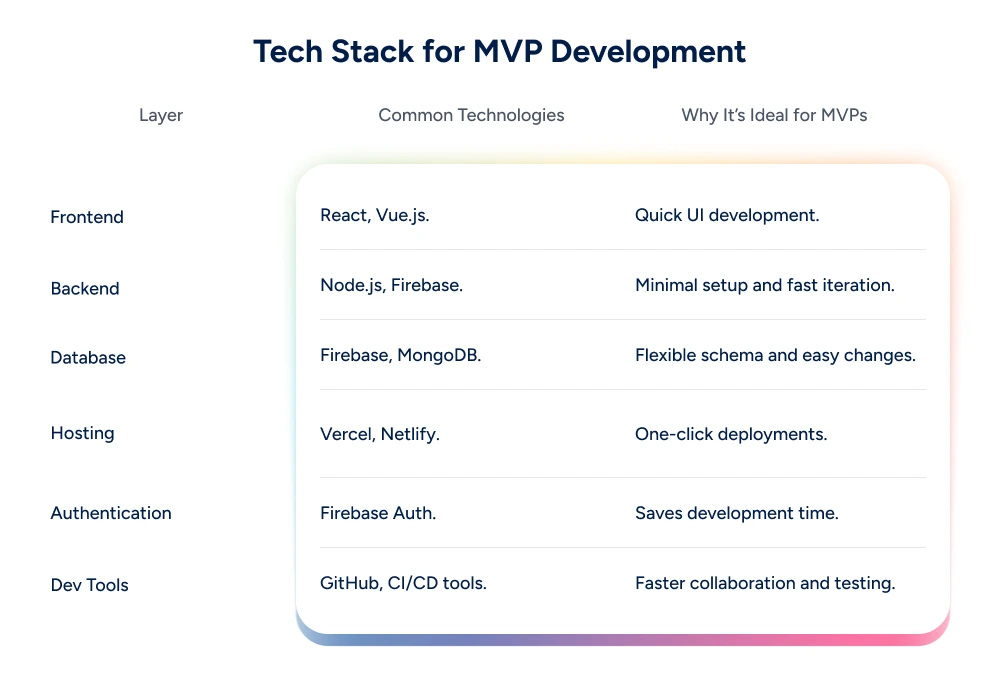
Frontend technologies are implemented to develop an application’s userinterface – the part of the application that users see and interact with. They put emphasis on layout, design, responsiveness, and user experience. Some of the frontend tools that can be part of the tech stack for startups are HTML, CSS, JS, and frameworks such as React, Vue. js, or Angular to allow startups to develop high-speed, intuitive, and scalable UI.
Also Read: Top Frontend Technologies to Use in 2026
Backend Technologies
Server-side logic is taken care by the backend technologies. They handle the processing of data, APIs, authentication, and communication between the frontend and the database. Some of the trending backend options for a tech stack when building a startup are Node. js, Python(Django or FastAPI), Ruby on Rails, Java) based on their stability and scalability potential.
Also Read: Top Ten Backend Frameworks
Databases
Applications’ data, like user accounts, transactions, and product turn into records that are stored on databases. It’s a common choice startups make between relational databases (i.e., MySQL and Postgres) and NoSQL databases (such as MongoDB and Firebase). Choosing the correct database is crucial for data consistency, performance, and scalability.
Cloud & Infrastructure
Cloud and infrastructure tools are the place where applications are hosted and scaled. With services like AWS, Google Cloud, and Microsoft Azure, no longer does a startup need to spend a ton of money on infrastructure just to deploy an app fast. Cloud-based services allow for resource scaling on demand and have high availability.
Development & DevOps Tools
Coding, deployment, monitoring and maintenance are now all supported by development and DevOps tools. Tools such as GitHub, Docker, CI/CD pipelines, and Kubernetes have allowed for streamlining workflows and digital cooperation. Adding the right DevOps tools to your startup tech stack will reduce time to release, improve reliability, and set you up nicely for long-term maintenance.
Why There Is No One-Size-Fits-All Tech Stack for Startup Success
There isn’t one tech stack for startups that will work the best with all companies, because every startup has different goals, products, and challenges. This is because a SaaS solution, a mobile app, and an e-commerce site each have unique technical requirements in terms of performance and scalability, and user experience! The best tech stack for startup growth in one industry might be inefficient or expensive in another.
Tech stack choices also depend on startup-specific factors such as budget, development timeframe, team skill set, and future scalability. Early-stage startups only need to care about speed and cost, while growing startups seem to value performance and long-term maintenance a lot more. Picking the right tech stack for a startup depends on how the technology supports your business, not just following what is fashionable or copying competitors.
Key Factors to Consider Before Selecting the Best Tech Stack for Startup Growth
To choose the best tech stack for startup growth, you need more than a trend-following mentality. Startups need to consider several variables that have a significant impact on speed of development, scalability and mid- to long-term costs. Thinking about these core areas early on enables founders to make decisions on a tech stack for startups that meets immediate requirements as well as longer-term scaling needs.
Business Goals and Product Vision
Every technology decision should be driven by your business goals and long-term product vision. Regardless of whether you’re creating an MVP, a SaaS, or a sizable app, the tech stack for startup growth that you choose needs to encompass your basic functionalities and plans. Opting for tech that fits your long-term vision can also mean preventing costly rebuilds down the road.
Budget and Time-to-Market
Startups usually operate on small budgets and time constraints. The most suitable tech stack for a startup will have the capability for quick development with minimum infrastructure or licensing fees: Attitude and ability to execute to solve problems. Open-source platforms and cloud services can lower costs and speed products to market.
Team Skills and Expertise
When considering what tech stack you should use for startups, your development team’s current expertise will be the most significant determinant. Leveraging technologies your team is already familiar with leads to increased productivity, fewer mistakes, and faster development. It would also increase costs and then hiring or training for tools that are unknown or misunderstood is time consuming.
Scalability and Performance Needs
When your startup is scaling, you want to know that for each new hundred users and each doubled load of data, your product won’t slow down in any way. Choosing a tech stack for startup scalability will make your app grow easily, be able to scale for traffic spikes, and perform consistently over time.
Security and Compliance Requirements
Security is vital to ensure user data remains safe and trust isn’t violated. The ideal tech stack requirements for startup growth should enable robust security measures like data encryption, secure authentication, and compliance with industry standards. Opting for secure and widely supported technologies helps reduce the risk as your startup grows.
Checklist: How to Choose the Right Tech Stack for Your Startup
This checklist breaks down the process of selecting a tech stack for startups into simple, actionable steps. By following each point, founders can evaluate technologies logically and avoid costly mistakes. It helps ensure the chosen tech stack for startup growth aligns with both current needs and future scalability.
Define Your Startup’s Product Requirements
Begin by articulating what your product must do today and teleport into tomorrow. Factor in features, desired users, platform(s) , and anticipated growth. Clear needs make it easier to choose a tech stack for startups that matches your product objectives.
Choose the Right Frontend Framework
The frontend needs to provide a SNAPPY user experience. Opt for frameworks and libraries that allow you to rapidly develop, update, have good performance on all devices, etc. The appropriate frontend decision will have a lot to do with user satisfaction and involvement.
Select a Reliable Backend Technology
Backend technologies: These are the tech tools that run your app’s logic, APIs, and how data flows. Choose a backend that is actively maintained, well supported, and can handle your load. A solid backend guarantees scalability and performance over time.
Choose the Right Database for Your Use Case
Varieties of data storage. Certain types of data storage are better suited to certain tasks. Select a database that fits your data structure, size, and query pattern. Choosing the correct database makes your app faster and scaling easier.
Evaluate Cloud and Hosting Options
Cloud makes it possible for startups to iterate very quickly without a lot of capital in infrastructure. Choose a hosting store that can scale, is affordable, reliable, and has excellent support. With flexible configurations in the cloud, it’s much easier to scale up if you experience greater demand.
Think of Scale and Upward Growth
Your tech stack must be able to scale with growth without revamping work. Pick technologies that can accommodate growing numbers of users, data, and features. Anticipatory planning prevents pitfalls when it comes to performance and tech.
Ensure Security and Data Protection
Security should be an integrated part of your tech stack decision. Choose tools and platforms that offer data encryption, secure authentication, and meet compliance needs. Good security increases trust and shields your startup against potential downsides.
Assess Development Speed and Maintenance
Startups need to be developed quickly, and they must also be easy to maintain. Select technologies that enable rapid iteration, easy debugging, and long-term support. This holds down downtime and operation costs.
Consider Integration and Third-Party Tools
These modern startups, in turn, lean on third-party services for payments, analytics , and CRM purposes. Verify that your tech stack for startup development allows for seamless integrations. It’s also easier to connect and offers greater functionality now, as well as future flexibility.
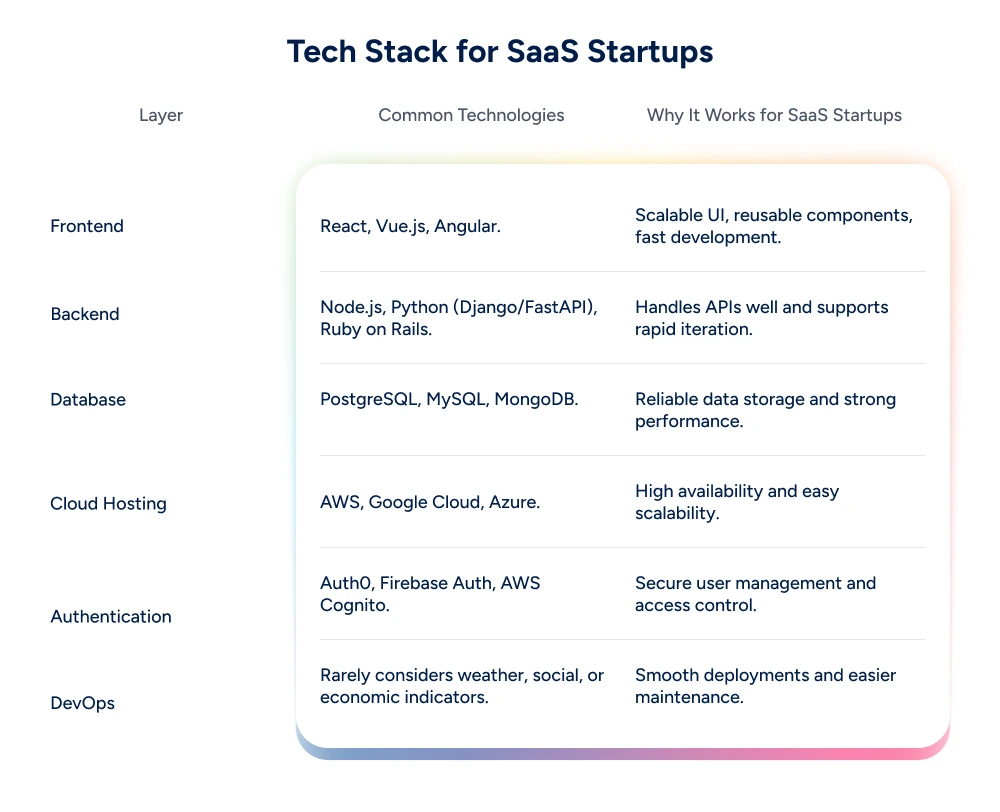
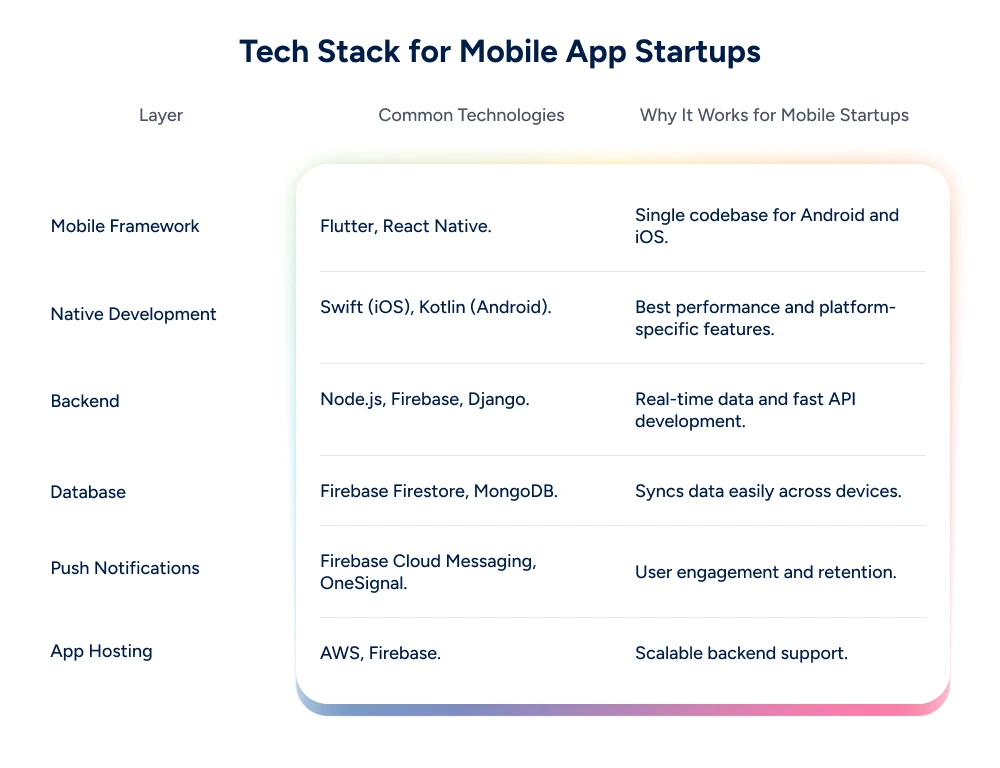
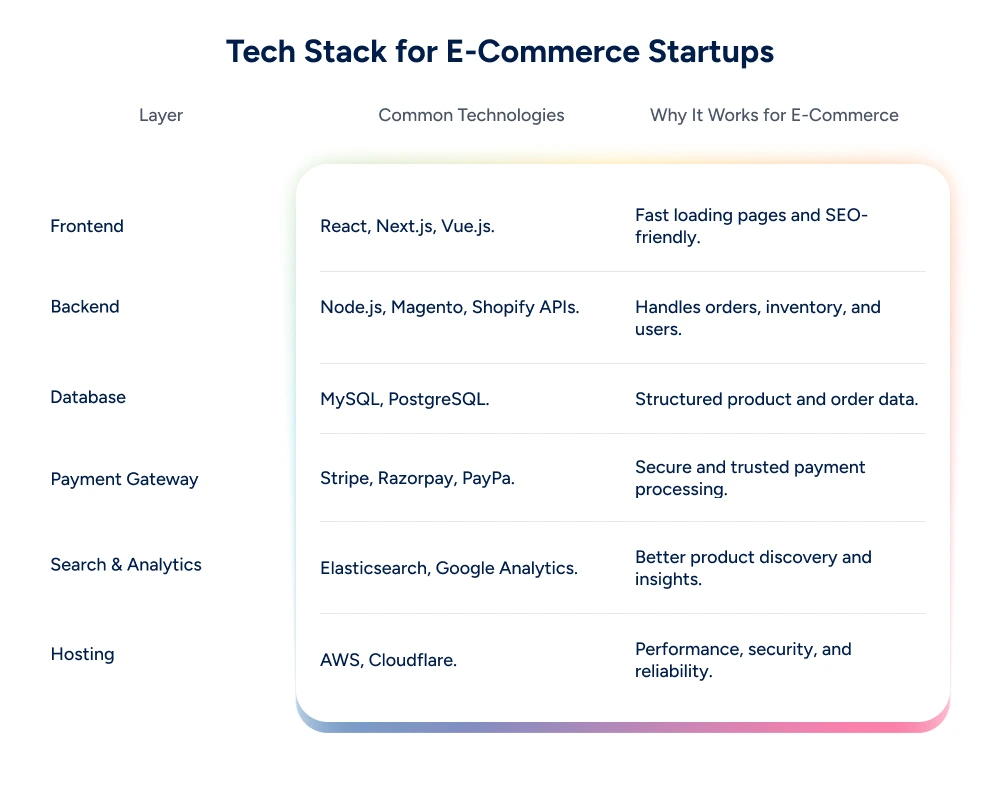
Popular Tech Stack for Startups in 2026
Common Mistakes Startups Make When Choosing a Tech Stack
- Choosing technologies based on trends instead of actual business needs
- Overengineering the product with an overly complex tech stack
- Ignoring the development team’s existing skills and expertise
- Failing to plan for scalability and future growth
- Underestimating security and compliance requirements
- Selecting tools that don’t integrate well with third-party services
How the Right Tech Stack for a Startup Can Reduce Costs and Improve Performance
Hence, using the best tech stack for startup development helps minimize costs due to faster development time, programmed maintenance processes, and optimal use of resources. Vendor-supported platforms and cloud services lower infrastructure costs while increasing deployment speed and reliability. A well-chosen tech stack also improves app performance, so you can scale with more ease and can deliver smooth user experiences as the startup continues to grow.
Final Checklist Summary: Choosing the Best Tech Stack for Startup Success
To choose the right tech stack for startups, follow this final checklist:
✅ Define your product requirements clearly before making technology choices
✅ Select frontend and backend frameworks that match your team’s skills
✅ Choose databases and cloud solutions that support scalability and performance
✅ Ensure security, compliance, and easy integration with third-party tools
✅ Consider development speed, maintenance, and long-term costs
✅ Align every technology decision with your startup’s goals and future growth
Also Read: AI-Assisted Development
Conclusion: Making a Smart, Future-Ready Tech Stack Decision
Selecting the right tech stack for startups isn’t just a matter of choosing popular technologies—it’s about thoughtful strategic decisions that reflect your product vision, team skills, and growth objectives. A good technology stack for a startup can lower development costs, improve performance, and ensure your application works optimally while expanding your business. Founders can construct a smart, forward-looking tech stack that will enable long-term success by thoughtfully considering needs, planning for the future, and using an organized checklist.











 Write us on:
  Business queries:
  HR:
HR: 


