



 Healthcare Software Development Services
 Healthcare App Development Services
 Real Estate Web Development Services
 Real Estate App Development Company
 E-Commerce App Development Services
 E-Commerce Web Development Services
 Blockchain E-commerce Development Company
 Fintech Software Development
 Fintech App Development Services
 E-Learning App Development Services
 Restaurant App Development Company
 Mobile Game Development Company
 Travel App Development Company
 Automotive Web Design
 AI Traffic Management System
 AI Inventory Management Software
 Logistics App Development Services
 Machine Learning Development
 ChatGPT integration services
  AI Development Company
  AI Integration Services
  Natural Language Processing Company
 Mobile App Development
  IOS App Development
  Android App Development
  Cross-Platform App Development
  Augmented Reality (AR) App Development
  Virtual Reality (VR) App Development
  Web App Development
  SaaS App Development
 Custom Software Development Services
  Flutter
  React Native
  Swift (IOS)
  Kotlin (Android)
  Mean Stack Development
  AngularJS Development
  MongoDB Development
  Nodejs Development
  Database Development
 Ruby on Rails Development
 Expressjs Development
  Full Stack Development
  Web Development Services
  Laravel Development
  LAMP Development
  Custom PHP Development
  .Net Development
  User Experience Design Services
  User Interface Design Services
  Automated Testing
  Manual Testing
  Digital Marketing Services
 Ride-Sharing And Taxi Services
 Food Delivery Services
 Grocery Delivery Services
 Transportation And Logistics
 Car Wash App
 Home Services App
 ERP Development Services
 CMS Development Services
 LMS Development
 CRM Development
 DevOps Development Services
 AI Business Solutions
 AI Cloud Solutions
 AI Chatbot Development
 API Development
 Blockchain Product Development
 Cryptocurrency Wallet Development
 About Talentelgia
  Our Team
  Our Culture
 Healthcare App Development Services
 Real Estate Web Development Services
 E-Commerce App Development Services
 E-Commerce Web Development Services
 Blockchain E-commerce
Development Company
Blockchain E-commerce
Development Company Fintech App Development Services
 Blockchain Fintech
Development Company
Blockchain Fintech
Development Company E-Learning App Development Services
 Restaurant App Development Company
 Mobile Game Development Company
 Travel App Development Company
 AI Traffic Management System
 AI Inventory Management Software
 AI Development Company
 ChatGPT integration services
 AI Integration Services
 Machine Learning Development
 Machine learning consulting services
 Blockchain Development
 Blockchain Software Development
 Smart contract development company
 NFT marketplace development services
 Asset tokenization companies
 DeFi Wallet Development Company
 IOS App Development
 Android App Development
 Cross-Platform App Development
 Augmented Reality (AR) App
Development
Augmented Reality (AR) App
Development Virtual Reality (VR) App Development
 Web App Development
 Flutter
 React
Native
React
Native Swift
(IOS)
Swift
(IOS) Kotlin (Android)
 MEAN Stack Development
 AngularJS Development
 MongoDB Development
 Nodejs Development
 Database development services
 Expressjs Development
 Full Stack Development
 Web Development Services
 Laravel Development
 LAMP
Development
LAMP
Development Custom PHP Development
 User Experience Design Services
 User Interface Design Services
 Automated Testing
 Manual
Testing
Manual
Testing About Talentelgia
 Our Team
 Our Culture
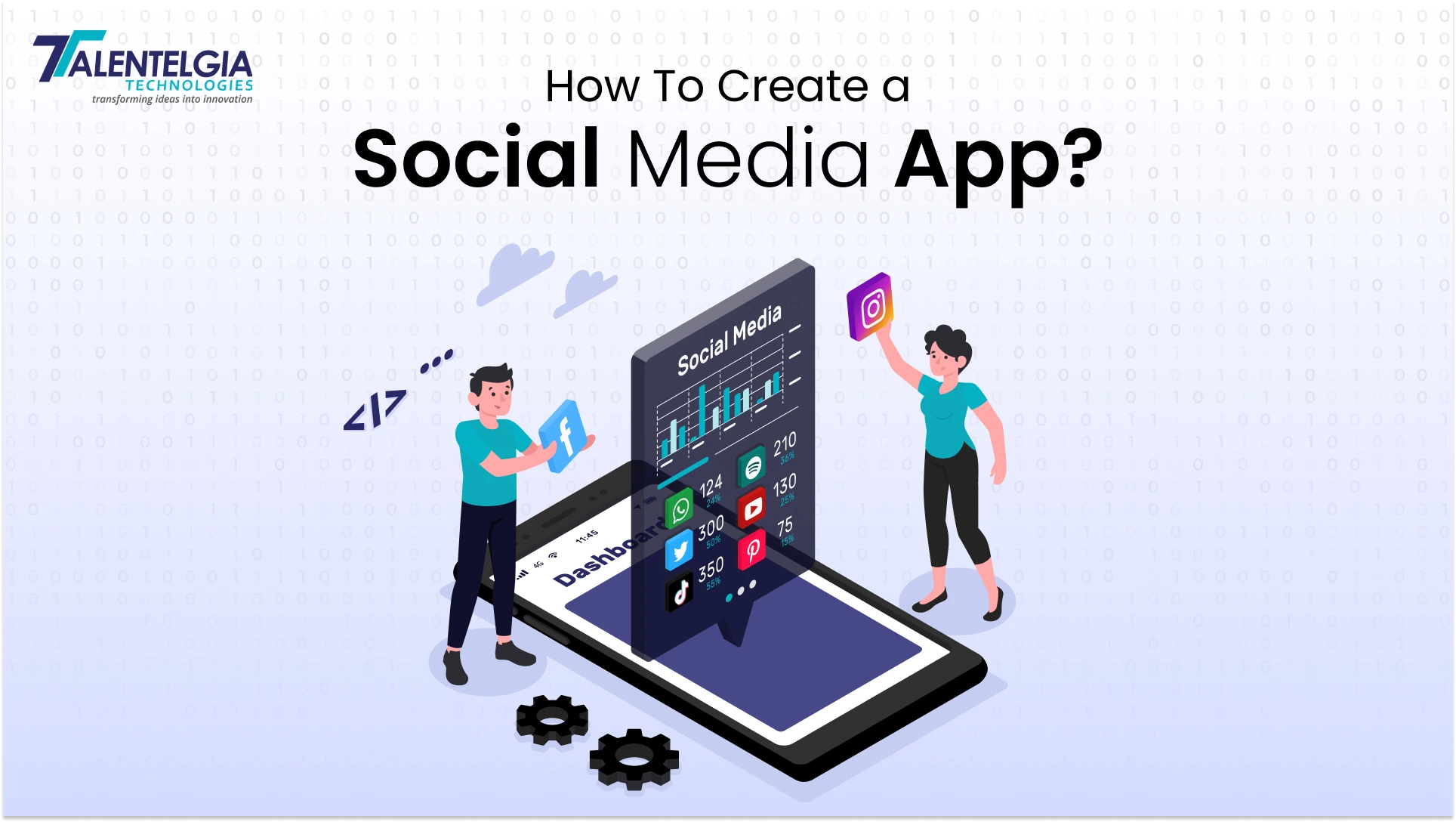
Nowadays, it’s hard to find someone who doesn’t use a social media app. In the present day and age, where the digital world is brimming with accessibility and connectivity for communication, and thus social media app development is a good idea. As per a report from Grand View Research, the social media app development market is projected to reach a valuation of $310.37 billion by 2030 with a CAGR of 26.2%. This showcases the profitability of the market.
Nevertheless, building a platform where people can communicate with others and create a community to share their thoughts is both exciting and challenging at the same time. So, if you’re planning to create a social networking app and want to explore what’s possible with modern mobile app development, you’re in the right place. In this comprehensive guide, we have highlighted the complete social media app development process, key features of a successful social app, and the most important aspects you must consider to build one effectively — especially when partnering with a professional app development company.
Overview of Social Media Platforms: Types & Benefits
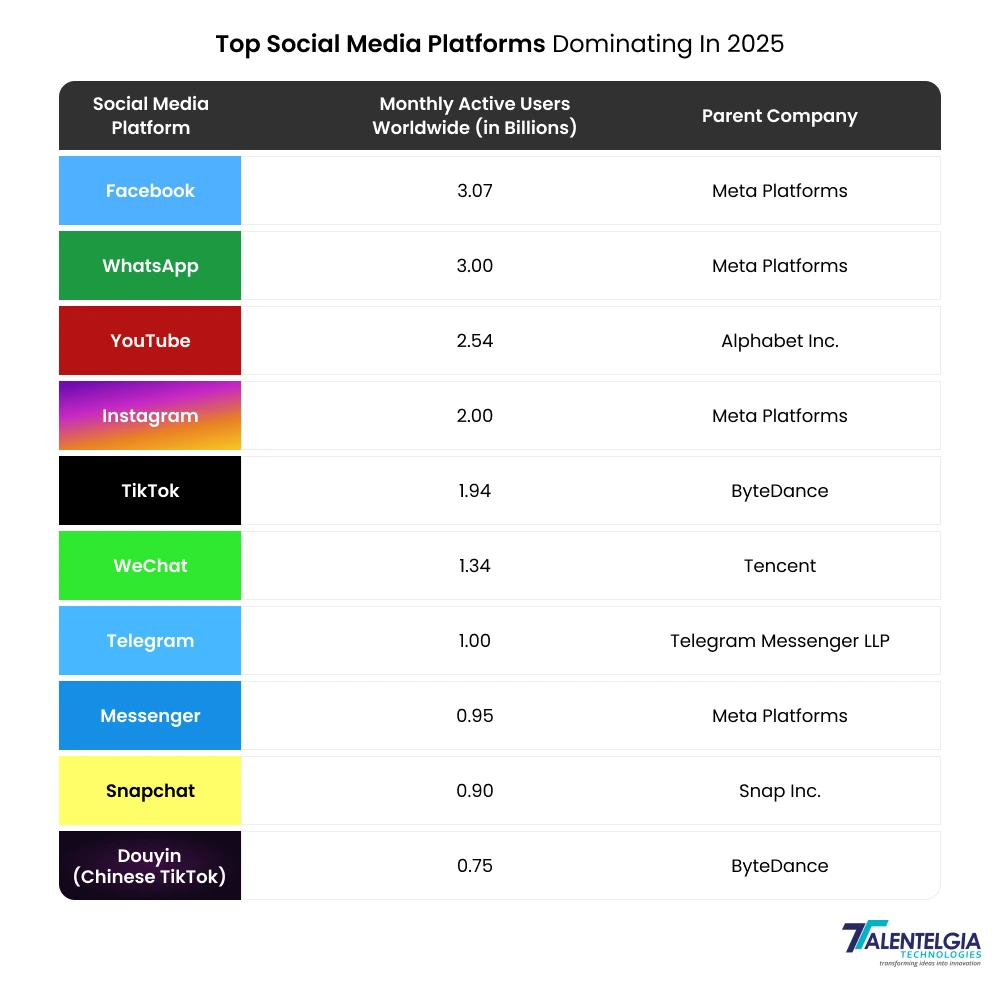
As per a report from Statista, the number of social media users worldwide as of October 2025 is 5.66 billion, which is equivalent to 68.7% of the global population. There are several social media platforms like Facebook, Instagram, and YouTube that dominate the global market with an active user base. These apps influence the trends in communication, entertainment, advertising, and sales.
What Is A Social Media App?
In layman’s terms, social media applications are platforms that enable users to connect, communicate, and share their posts with either a public or a niche audience. If we see the current app market, the most popular apps are those that enable users to compose custom ‘forum threads’, a feature that enhances their experience and fosters a sense of a lively community. In these apps, users gain access to a virtual forum that facilitates the sharing of ideas, opinions, multimedia content, and more.
There are different types of social apps available for different purposes. For instance, apps like Facebook and Instagram are good for social sharing and chatting, while TikTok is widely popular for short-form video content. The popularity of these apps also demonstrates the flexibility in features and user experience that social media app developers can offer.
Different Types of Social Media Applications
The reason why understanding the seven different patterns of how to build a social media app is important is that every platform captures a specific audience. This effect allows you to funnel the most relevant content to the desired audience, therefore maximizing the reach and engagement. The seven types of social media are:
1. Social Networking Platforms
These apps connect users primarily for social interaction, community building, and networking. They focus on creating profiles, friend/follower systems, and communication features.
- Examples: Facebook, LinkedIn, Google+
- Key Features: User profiles, friends/followers lists, news feed, messaging, event creation, group communities, and content sharing (text, photos, videos).
2. Microblogging Platforms
Microblogging apps emphasize short, real-time posts and updates. They enable quick sharing of thoughts, news, and multimedia, often focusing on brevity and immediacy.
- Examples: Twitter, Tumblr, Mastodon
- Key Features: Short posts (tweets), hashtag support, trending topics, real-time news feed, retweets and shares, direct messaging.
3. Content Sharing Platforms
Focused on media content, these platforms allow users to upload, share, and discover images, videos, and creative works. High engagement comes from visual storytelling and multimedia experiences.
- Examples: Instagram, YouTube, TikTok, Pinterest
- Key Features: Media uploading, editing tools, filters and effects, video streaming, likes and comments, personalized discovery algorithms.
4. Messaging and Communication Apps
These are built for one-on-one or group communication, combining texting, voice, and video functionalities for instant connectivity.
- Examples: WhatsApp, Messenger, Telegram, Signal
- Key Features: Instant messaging, voice and video calls, group chats, end-to-end encryption, emojis and stickers, file sharing.
5. Discussion Forums and Community Platforms
These platforms focus on topic-based discussions, knowledge sharing, and community engagement centered around shared interests or goals.
- Examples: Reddit, Quora, Discord
- Key Features: Threaded discussions, voting/upvoting, categories and subforums, community moderation, user reputation systems.
6. Live Streaming and Real-Time Interaction Apps
They enable users to broadcast live video content, interact with audiences in real-time, and create interactive experiences such as gaming, Q&A sessions, and live events.
- Examples: Twitch, Periscope, Facebook Live, YouTube Live
- Key Features: Live video streaming, real-time chat, donation and subscription options, viewer interaction tools, stream recording.
7. Professional Networking Platforms
These are specialized for career development, professional connections, job hunting, and business networking.
- Examples: LinkedIn, Xing
- Key Features: Professional profiles, endorsements, job postings and applications, content publishing, and networking events.
Is Custom Social Media App Development a Good Idea In 2025?
In a world where the big bosses of social media— TikTok and Instagram exist, any entrepreneur thinking about developing a social media app might very well have one perfectly reasonable question: Does the world actually need this? The answer to this question is undoubtedly “YES.” Although the social media scene is dominating the rest of the social apps in the industry, there’s still room for new competitors. Here are the reasons why:
1. Connect Directly with Your Audience
A social media app provides a direct communication channel between you and your users without intermediaries. This real-time interaction allows personalized engagement, instant feedback, and stronger relationships. Brands can better understand their audience’s preferences, address concerns promptly, and foster vibrant communities, leading to increased loyalty and trust.
2. Boost SEO and Increase Traffic
Social media apps amplify your online presence by driving traffic to your website or other digital assets. Sharing content and encouraging user-generated posts creates backlinks and increases visibility in search engine rankings. Enhanced engagement on your platform signals relevance to search engines, helping your brand appear higher in search results, which translates into more organic traffic and growth.
3. Collect Better Data & Insights
Owning a social media app enables you to gather rich, first-party data about user behavior, preferences, and trends. This insightful data empowers you to tailor content, optimize features, and fine-tune marketing strategies with precision. Unlike relying on third-party platforms, this direct data access ensures more accurate analytics and enhanced decision-making.
4. Earn Revenue Through Ads
Monetising through targeted advertisements is a significant revenue stream in social media apps. With detailed demographic and behavioural data, you can offer advertisers highly specific audience segments, increasing ad effectiveness and returns. This creates a sustainable business model where both users receive relevant ads, and you earn revenue to continuously invest in app improvements and innovation.
How To Build a Social Media App In 2025: Step-by-Step Guide
2025 is the right time to start learning how to build a social network site from scratch. Developing a social media app requires following a process that simultaneously includes ideation, design, launch, and regular updates and maintenance:
Discovery & Requirement Gathering
This initial phase involves clearly defining your social media app’s purpose and goals. Conduct detailed market research to understand your target audience and analyze existing competitors. Identify gaps or unmet needs your app can fulfill. Outline the core features and unique value proposition. This stage sets realistic milestones and ensures everyone involved understands the project’s scope.
Planning and Technology Selection
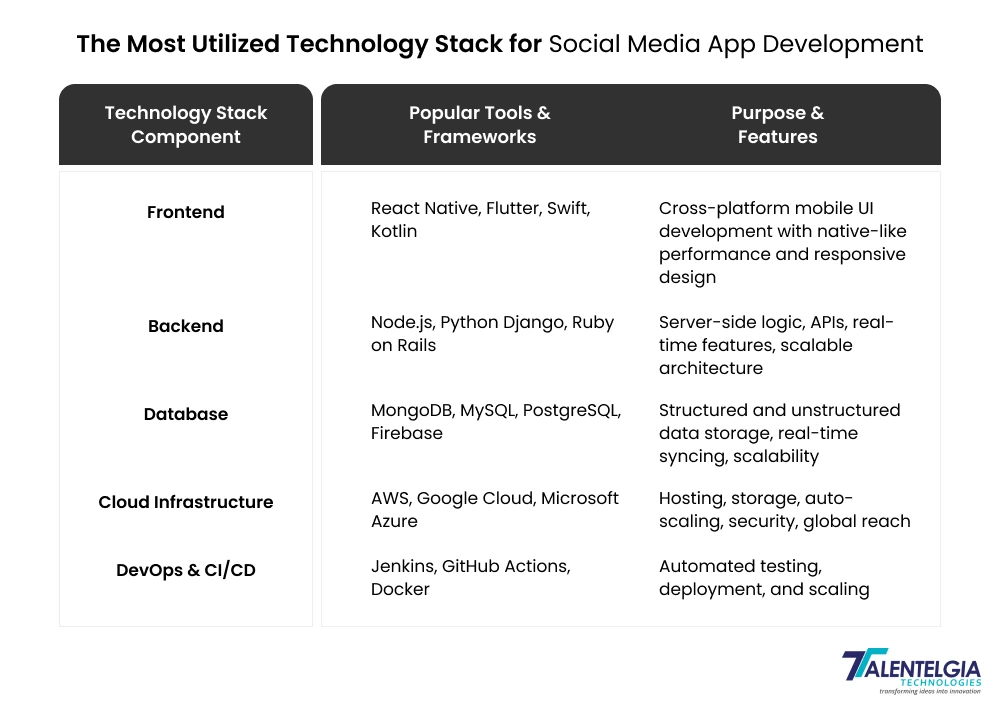
Based on your discovery, choose the type of social media app you want to build—whether it’s a general networking platform, a media-sharing app, or a messaging service. Next, explore the right Technologies to Develop Mobile Apps, selecting a tech stack that ensures scalability, security, and high performance. For example, React Native or Flutter can be great choices for the frontend, while Node.js or Django can support a strong backend architecture. Plan your infrastructure using cloud platforms like AWS or Google Cloud, and don’t forget to estimate your budget and set a realistic development timeline.
Designing UX/UI
Start by creating wireframes that map out user flows and app structure to visualize the user journey. If you’re wondering How To Design Mobile App Interface?, the next step is to progress to designing high-fidelity prototypes with a mobile-first approach, ensuring smooth navigation and strong visual appeal. Prioritize usability and accessibility so the app works well for diverse user groups. Conduct usability testing early to gather feedback and refine the design before development begins.
Backend Development
Architect the server-side environment, setting up databases and APIs to manage user data securely and efficiently. Develop core backend modules like authentication, authorization, content management, and social interaction features. Integrate third-party services for notifications, analytics, and media storage. Ensure your backend is robust and scalable to handle growing user loads seamlessly.
Frontend Development
Translate design prototypes into interactive and responsive interfaces. Build reusable UI components covering essential features like news feeds, user profiles, messaging, and notifications. Implement real-time functionalities such as live updates and instant messaging to ensure dynamic engagement. Optimize frontend performance for various screen sizes and network conditions.
Testing and Quality Assurance
Perform extensive testing covering functionality, performance under load, security, and usability. Use automated tools and manual testing to identify bugs or glitches. Conduct security audits to safeguard user data and privacy. Conduct beta tests with real users to obtain feedback on the experience and fix usability issues before public launch.
Deployment and Launch
Prepare deployment environments and register your app with platform stores (Apple App Store, Google Play). Optimize app store listings with compelling descriptions, screenshots, and demo videos to enhance discoverability. Launch your backend services on production-grade environments and monitor early usage to identify issues promptly.
Post-Launch Support and Maintenance
Provide continuous support by releasing regular updates for new features, bug fixes, and security patches. Analyze user behavior and feedback to guide feature prioritization and improvements. Scale backend infrastructure according to user growth to maintain performance. Foster community engagement and provide timely assistance to retain and grow your user base.
How Much Does It Cost To Develop a Social Media App?
Understanding How Much Does It Cost To Develop an App? depends on several factors, such as the features you want to include, the technologies used, and the expertise of the development team.
For example, a basic social media application is estimated to cost around $50,000 to $100,000 on average. But if you’re planning a more advanced product — including personalized features, enhanced security, and AI-powered capabilities — the cost can increase significantly, ranging roughly between $200,000 to $500,000 or even more.
Final Thoughts
In today's digital era, developing a social media application allows you to build a network and connections with users and create a growing community. Through meticulous planning and design at every stage, you can develop a unique application from scratch, right from the ideation stage, to feature selection, compliance, and monetisation strategies, while keeping the users engaged till the end.











 Sales Enquiries:
  Business queries:
  HR:
HR: 


